Should you worry about owning a matching belt and shoes?
The short answer? Yes!
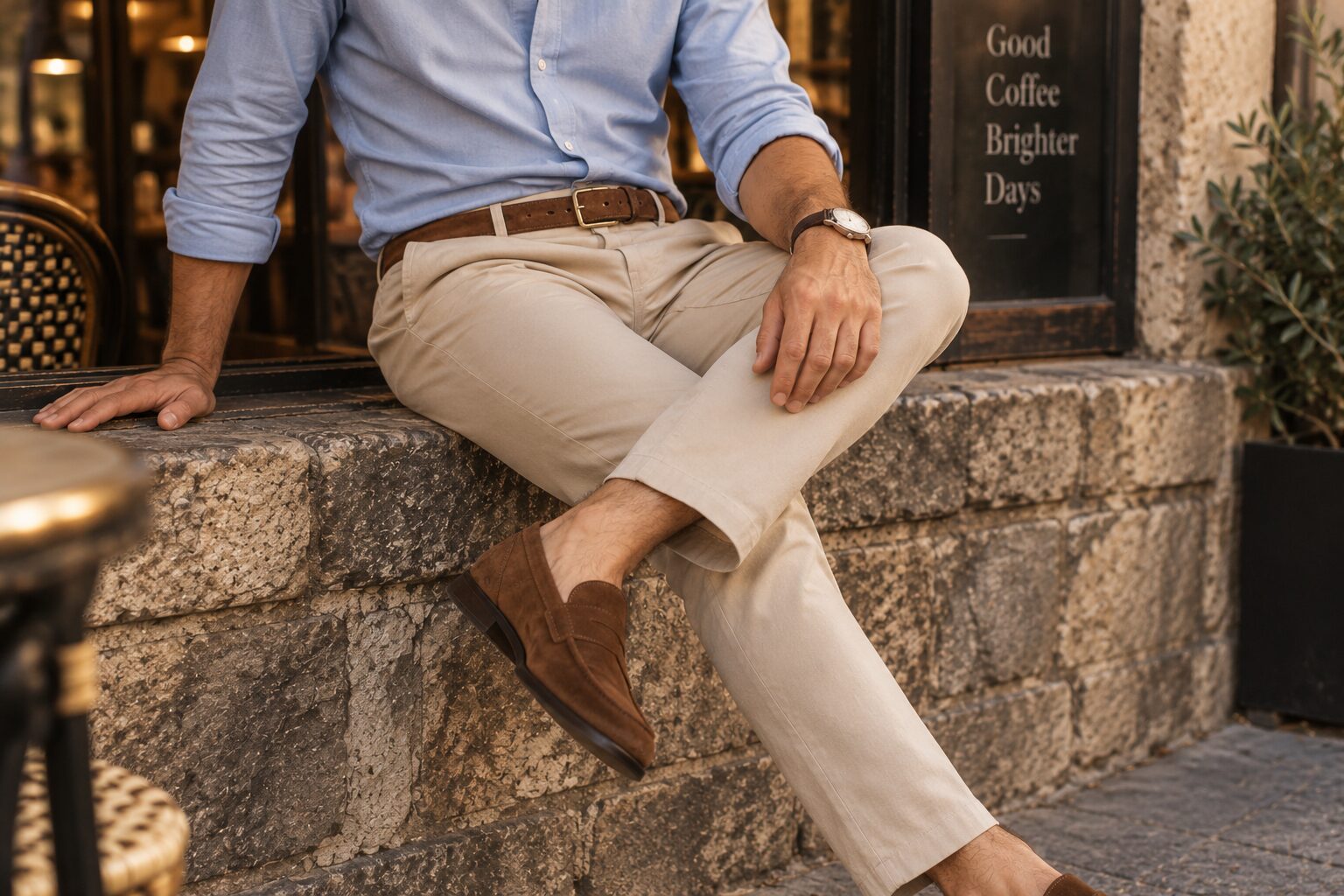
I know, matching clothes can be tricky for us guys. However, matching your shoes and your belt is actually simpler than you think. In fact, it's really quite simple as long as you remember a few basic rules.
The best part?
You're also free to bend (or break!) these rules when they don't work for you.
In this article, I'll discuss the basic rules on how to match your belt and shoes, as well as how and when to disregard those rules and still look great.
As I mentioned above, the rules for matching your belt and leather shoes are pretty simple.
In fact, there are really only three rules!
Keep reading.
Matching Belt And Shoes Rule #1 – Match The Leather

This rule couldn't be simpler. Lucky you! In general, the more contrast there is between your belt strap and your shoes (or even briefcase or messenger bag), the less stylish you're going to look.
If you've got a dark brown belt strap, the most logical choice for shoes would be dark brown ones. If your shoes have a distinct oxblood color, then an oxblood belt strap is the way to go.
Nevertheless, don't worry too much about a slight difference in the tones of both items. It's not a big deal if, for example, your dress shoes are darker in the front than at the back. As long as they're closely similar in color, you got the job done.
Matching Belt And Shoes Rule #2 – Match The Metals

Essentially the same concept as above. You want the belt buckle to have a very similar color to the metal on your shoes if they have metal. Specifically, we are talking about the buckles on monk strap shoes.
Gold goes with gold, silver with silver, etc. You might even want to take it a step further by matching these buckles to the metal in your other jewelry, in particular your watch or whatever rings you're wearing.
A notable exception: your wedding ring, which it's perfectly acceptable to keep on at all times.
Don't let matching make you discard sentimental or irreplaceable items, such as your wedding ring or an heirloom watch. Again, the real priority here is matching the leathers, as mentioned in rule #1.
Matching Belt And Shoes Rule #3 – Match The Texture And Formality

Color gets you most of the way there. The last stretch is texture – and this is where a lot of otherwise well-dressed guys slip up.
Leather comes in different finishes, and the finish tells people how formal the item is. A smooth, polished calfskin belt goes with smooth calfskin dress shoes. Suede goes with suede. A pebble-grain or oiled belt goes with grained brogues and rugged boots.
Put a glossy black dress belt with matte suede loafers and the colors can match perfectly – the outfit still looks off. One item says boardroom. The other says Saturday morning coffee.
Here's the simple way to sort it:
- Formal (suits, black oxfords, cap-toes): smooth calf belt, about 1.25 inches wide, with a slim polished buckle.
- Business casual (sport coat, chinos, loafers or derbies): smooth or lightly grained leather, or suede, 1.25 to 1.5 inches, simple buckle.
- Casual (jeans, boots, sneakers): grained leather, suede, braided leather, or woven fabric, 1.5 inches or wider. A heavier buckle is fine here.
Width matters more than most men think. A wide, chunky work belt with a slim suit is the same mistake as hiking boots with a tuxedo – the proportions fight each other. As a rule, the wider the belt, the more casual it reads.
Here's the whole thing on one chart. Bookmark it.
| Your shoes | Belt | Buckle | Dress level |
|---|---|---|---|
| Black calf oxfords / cap-toes | Black smooth calf | Silver, slim | Formal |
| Dark brown / walnut dress shoes | Dark brown smooth calf | Silver or brass | Business |
| Light brown / tan shoes | Tan or mid-brown leather (darker is OK if the sole is dark) | Brass or silver | Business casual |
| Oxblood / burgundy | Oxblood leather | Silver or brass | Business casual |
| Brown suede loafers / desert boots | Brown suede or braided leather | Brass or antiqued | Casual |
| Gray shoes | Black, gray, or dark blue | Silver | Casual |
| Two-tone shoes | The dominant color | Match any metal on the shoe | Casual |
| Brown boots | Rugged brown leather, ~1.5″ | Brass or antiqued | Casual |
| Black boots / Chelsea boots | Matte black leather | Silver or gunmetal | Casual |
| White leather sneakers | Tan leather, woven, or navy canvas | Any – keep it simple | Casual |
| Monk straps | Match the leather | Match the strap buckles | Business |
| Bottom line | Match the leather color first, then the texture, then the metal. Never mix black and brown. | ||
Belt widths: about 1.25″ for dress, 1.5″ or wider for casual.
Is that all there is to it, you ask? Seriously? Doesn't this mean that matching your shoes and belt is really a non-issue? For the most part, yes. But it's actually more complicated when you bring in this question:
Do I always have to match my shoes with my belt EXACTLY?
No.
The three “rules” above aren't terribly strict. There's no shame in bending or breaking them when you know how and have stylish intent.
This is where it helps to answer some of the FAQs about matching that men ask me. Some of the answers may surprise you – or give you a different perspective on certain colors and combinations.
Here they are…
Matching Belt And Shoes Question #1: Can You Wear Black Shoes + Brown Belt?

No. It's best not to try this combo at all. If you check the color wheel, you'll see that brown is technically a warm tone (e.g. a variant of red) whereas black is classified as a cool color.
Black leather shoes are usually sleek and classy-looking, which is why they're most deserving of a black belt strap. Black-black is the most formal shoe–belt pairing. It'll sharpen your style more the next time you're sporting a charcoal gray suit.
Since people usually notice your shoes more than your belt, you might get away with ditching the belt altogether if you're wearing a suit jacket, sports coat or blazer. It's certainly a better last-minute solution than purchasing a new belt just for tonight's outfit. Just make sure your trousers fit well enough to stay secure without a belt on.
Matching Belt And Shoes Question #2: Can You Wear Different Shades Of Brown?

Yes. You might have a pair of light brown dress shoes and think they'll clash with your chocolate brown belt. Except they're both shades of brown. It's even less of a problem if your shoes are the kind where the heel and sole have a darker color than the upper. Therefore, there's still a sense of good matching involved if the belt and the bottom of your shoes share a similar tone.
Matching Belt And Shoes Question #3: What Belt Do You Wear With Black Or Gray Shoes?

Gray belt + black shoes, black/gray/dark blue belt + gray shoes. Since black and gray are essentially non-colors, they generally match better with cooler tones than warmer ones.
One caveat: a gray belt with black shoes is a casual move – think a gray suede or woven belt with jeans and black boots. With a suit, stick with black on black.
Matching Belt And Shoes Question #4: What Belt Do You Wear With Oxblood Shoes?

An oxblood belt. Even though oxblood can pass for a type of brown to some of us, there's a redness to it that makes the shoes more distinct and attention-grabbing than brown ones. Hence, only an oxblood belt strap will maintain the balance here. Having both brown and oxblood in a single outfit can cause it to appear just a bit too “busy.”
Matching Belt And Shoes Question #5: What Belt Do You Wear With Two-Tone Shoes?
A belt with the dominant/stronger tone. You don't have to obsess over finding a perfect-matching belt with the exact two tones. Just pay attention to the overall feel of the shoes, identify the dominant color, and let that be the basis for your choice of belt. The key is complementing, not trying for a perfect 100% match. For example, pair a dark brown belt with shoes that have blue suede on the midsection and a similar brown for the rest of the body.
Matching Belt And Shoes Question #6: What Belt Do You Wear With Sneakers, Boots, And Casual Shoes?

Relax the rule – but don't drop it. With jeans and sneakers, nobody expects a perfect leather match. Most sneakers aren't even leather-colored. What you still want is a belt that looks like it belongs in the same outfit.
- White leather sneakers: a tan or cognac leather belt, a woven fabric belt, or navy canvas. Skip the shiny black dress belt – it's way too formal for the shoes.
- Brown boots: a rugged brown leather belt about 1.5 inches wide, ideally with a brass or antiqued buckle. Boots are where texture matters most, so pick oiled or grained leather over polished calf.
- Black boots or Chelsea boots: a black leather belt with a matte finish.
- Suede loafers or desert boots: a suede belt in a similar shade, or a braided leather belt.
- Colored canvas sneakers: a neutral belt that matches your trousers, or a woven belt that picks up the color of the shoes.
Here's my rule of thumb for casual outfits: your belt should connect to something. The shoes, the trousers, the watch strap – pick one. A belt that connects to nothing is the one people notice.
The Three-Belt Wardrobe (And When To Skip The Belt Entirely)

The question I hear most isn't “which belt matches?” It's “how many belts do I actually need?”
Fewer than you think. Three belts cover about 90% of the shoes most men own:
- Black smooth calf, about 1.25 inches, silver buckle. For black dress shoes, suits, and every formal event on your calendar.
- Dark brown smooth calf, about 1.25 inches. For dark brown and walnut dress shoes, loafers, and derbies. This is the belt you'll wear most.
- Brown suede or braided leather, about 1.5 inches. For suede shoes, boots, sneakers, and jeans.
Add a fourth belt only when you own shoes that demand it – oxblood, or a light tan. Don't buy the belt first and go hunting for shoes to justify it. For buckle types, materials, and sizing, see my men's belt guide.
Now, one thing most belt guides never mention. Your belt is a horizontal line across the middle of your body. If you're shorter or carry some weight around the middle, a belt that contrasts hard with your trousers – a black belt on light khakis – pulls the eye straight to your waist and cuts your frame in half. Matching your shoes still comes first. But choose a narrower belt and trousers in a shade close to it, and the line almost disappears. Dark brown belt on navy trousers reads far softer than black belt on stone chinos.
Or skip the belt altogether. Ask your tailor to add side adjusters to your suit trousers, or wear braces – just never a belt and braces at the same time. No belt, no matching problem, and a cleaner line under your jacket. I cover this in detail in when to go beltless.
This post was brought to you by Anson Belt interchangeable belts.
I've worked with this company for over 8 years. I've always been impressed by their innovative micro-adjustable belts and belt system. Here’s what makes these belts a fantastic tool for stylish men today:
- Belts do NOT require holes (they can be adjusted by every 1/4 inch).
- They're designed as trim-to-fit, so you only need scissors to cut off excess material.
- Buckles & straps have similar widths (1.25/1.5 inches), which makes them easy to interchange to suit different outfits.
- No bends or tears in the material for a long time.
Belt And Shoe Matching FAQ
What color belt goes with everything?
None does. Dark brown comes closest – it works with brown shoes from walnut to dark chocolate and sits fine in most casual outfits. But it can't replace a black belt with black shoes. If you can only own two belts, make them black and dark brown.
Does your belt have to match your shoes with jeans?
Not exactly, but keep it in the same family. Brown boots get a brown belt, black boots get a black belt, and the texture should be casual – grained leather, suede, or woven. With sneakers, see Question #6 above.
Should your belt match your watch strap?
Closely related, not identical. A brown leather watch strap with a brown belt and brown shoes is a nice touch, but the shades don't need to be exact. The metals matter more – a steel watch looks best with a silver buckle (Rule #2). A metal bracelet watch takes the question off the table.
Wear It With Confidence
Ultimately, you have to be confident enough, whether you follow these matching tips or decide to ignore them every once in a while. Trust me when I say that confidence in your style and clothing makes life so much easier and enjoyable. If you truly believe in what you're wearing, show a genuine smile, and can be yourself all day – voila! You can bet that others will comment how great you look.