
A man needs at least two suits. Possibly three.
But which colors? Navy? Gray? Black?
Here's the deal — knowing how to choose a suit color matters more than any other decision you make about the suit. A good suit costs real money, and the color decides how often you can wear it. Pick right and one suit covers job interviews, weddings, funerals, and every big meeting for the next five years.
Pick wrong and it hangs in your closet waiting for an occasion that never comes. Or worse — you show up to a funeral in tan and spend the whole service feeling every eye on you.
In this article, I'm showing you how to choose a suit color the simple way: nine colors ranked from most versatile to least, the order to buy them in, and how to match the color to your skin tone so the suit flatters you instead of washing you out.

I rank suit colors starting with the most versatile to make it easier for the man on a budget to prioritize.
The suits are:
Best Suit Colors #1 Navy Blue Suit

The number 1 and 2 rankings of suit color in this list may be interchangeable, especially in North America.
However, navy blue edges out charcoal grey slightly throughout the United States; navy blue is considered the de facto color.
All stores specializing in men's suits will carry a navy-colored one.

Navy suits are ideal for the man who wants to fit in, known for what he can do and not for what he wears.
Another advantage of a navy suit is that if a gentleman wants to customize it, he can include a few fashion-forward details because the color is so straightforward.
Best Suit Colors #2 Charcoal Gray Suit

A charcoal gray suit is just about as versatile as navy, making it one of the easiest when learning how to choose a suit color.
The one advantage that it has over the former is that it is ideal for the younger man as it can add a little more age to him.
Navy suits can make a young man look even more youthful, while charcoal gray does not have that same effect.

Charcoal gray is extremely easy to match. As that charcoal is firmly on the grayscale (absent of color – a neutral), it goes well with a wide range of colors allowing a man to be more adventurous with the shirts and ties that he pairs with this suit.
When it comes to formality – this is adequate for work, church, weddings, funerals, or meeting the president.
Best Suit Colors #3 Cambridge/ Medium Gray Suit

There are many shades of gray which means that there is a marked difference between charcoal grey and medium gray.
A medium gray suit will be a little lighter compared to charcoal.
In terms of versatility, it is still about equal to charcoal gray.

However, it is not as formal as charcoal gray and navy blue, although very few people and places will be able to tell the difference.
Having the three suits mentioned above will already make for a highly versatile wardrobe, especially if each suit had slight differences in the details that go into them.
Best Suit Colors #4 Light Gray Suit

A light gray suit is distinctively lighter compared to its other gray brethren.
This suit works well for spring, summer, and early fall. Because it reads lighter and softer, it gives you more room to play with shirt and tie colors than the darker suits do.
The light gray suit is more casual. It is ideal to invest in one once a man has all of the “must-haves” in his wardrobe.

This shade is a great way to break up the monotony of wearing the more usual shades.
The lighter the shade, the easier it is to introduce patterns, such as checks or herringbone, into the suit as the patterns are easily visible.
Best Suit Colors #5 Men's Black Suit
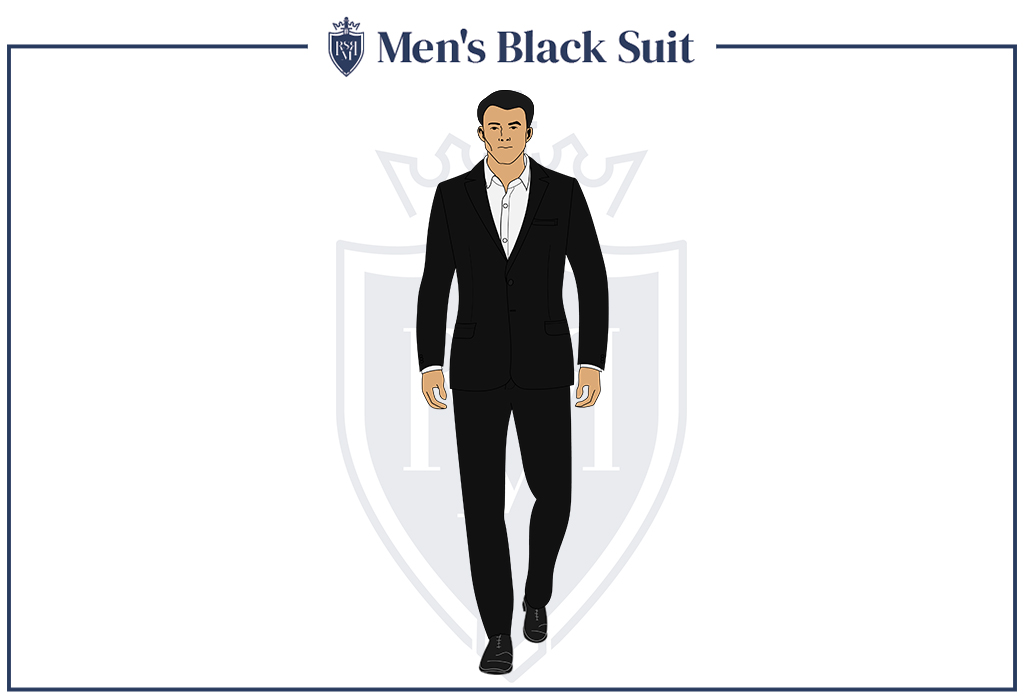
The black suit only gets 5th place because it is not as versatile compared to the ones previously mentioned.
Black does not work for every skin type. A black suit works well for a man with a darker complexion and dark hair.
A black suit does not look flattering on a man with a lighter complexion and light hair-such as a redhead as it can easily wash him out.

Black suits are limited in their versatility due to the stark contrast with anything else you are wearing.
A black suit is useful for evening events and the most somber occasions. One thing it is NOT is a substitute for a tuxedo.
If the invitation says black tie, wear a tuxedo — satin lapels, matching stripe down the trouser, bow tie. A black business suit at a black-tie event looks like you missed the memo. A black suit is also appropriate for funerals.
Best Suit Colors #6 Dark Brown Suit

A dark brown suit can work if a man has dark hair and a darker complexion. It can work for some blonds, redheads, and men with ruddier complexions.
A dark brown suit can be effective in adding a little bit of color, but if you are new to discovering how to choose a suit color, this can cause some confusion if not worn correctly.

However, those who choose to wear it should exert caution as it is not a formal suit.
Never wear a dark brown suit to a formal event or a place where the business dressing is taken very seriously (world cities such as New York and London).
Best Suit Colors #7 Tan/Khaki Suit

A tan suit falls under the category of a brown suit as they fall within the same color family.
However – for this article, I separate them as summer wear; they are more at home in warmer weather and could quickly supplant the brown suit in this list due to their versatility, assuming you have the weather and complexion to pull it off.

Like the light gray suit, a khaki can spice up the wardrobe, especially for the man who constantly wears suits to work.
They are a solid choice for low contrast men as the lack of color won't overpower neutral features and allow you to wear pastels to more effect.
Best Suit Colors #8 True Blue Suit

Compared to navy, a genuine blue suit can be harder to find.
Public figures like Prince William and Prince Harry helped popularize the hue, and it is an excellent color to wear.
A genuine blue suit is more popular in Europe and parts of Asia. However, it doesn't score very high for North American-based gentlemen because it is simply difficult to find and less formal than navy.

A man may have to consider getting a custom suit made if he wants a true blue one. A great option if you own close to a dozen suits and want something for weekends or events where a formal color isn't required.
Best Suit Colors #9 White Suit

The final suit color is white.
Unless you're a major personality such as Tom Wolfe – who made the white suit his signature look – the white suit will more often appear as odd.
Wearing a white suit draws attention to oneself. Therefore it can be ideal for white parties or when you have to make a major presentation and command everyone's attention.

However, a white suit is not necessary, and men should not prioritize having it as part of their collection.
The 9 Suit Colors At A Glance
Here's the whole ranking on one screen — how formal each color is, where to wear it, what season it belongs to, and which shoes go with it.
| Color | Formality | Best for | Season | Shoes | Buy |
|---|---|---|---|---|---|
| 1. Navy | High | Interviews, business, weddings, funerals | Year-round | Black, dark brown, burgundy | Suit #1 |
| 2. Charcoal | Highest | Conservative offices, funerals, interviews | Year-round | Black, burgundy | Suit #1 or #2 |
| 3. Medium gray | Medium-high | Daily business, weddings | Year-round | Black, dark brown, burgundy | Suit #3 |
| 4. Light gray | Medium | Daytime weddings, summer events | Spring–early fall | Brown, burgundy, suede | Suit #3–4 |
| 5. Black | High (evening) | Funerals, evening events. Not black tie | Year-round | Black only | When needed |
| 6. Dark brown | Medium-low | Smart-casual, creative offices | Fall–winter | Dark brown, burgundy | Suit #4+ |
| 7. Tan / khaki | Low | Outdoor summer weddings, warm climates | Summer | Brown, tan, suede loafers | Suit #4+ |
| 8. True blue | Medium-low | Weekends, social events | Spring–summer | Brown, tan | Suit #4+ |
| 9. White | Lowest | White parties, resort events | Summer | Light brown, loafers | Optional |
Scroll sideways on mobile to see all columns.
The Buy Order: Which Suit Color To Buy First, Second, And Third

The ranking above tells you which colors work hardest. This tells you what to actually buy, in order. Most men get this backwards — they buy a black suit first because it “goes with everything,” then wonder why it only comes out for funerals.
Suit #1 — navy or charcoal. Never black. If you're under 30 and want to look a little more seasoned, or you work in a conservative field like law or finance, go charcoal. Everyone else, go navy. Either one will carry you through an interview, a wedding, a funeral, and a board meeting.
Suit #2 — the one you didn't pick. Navy and charcoal together give you two serious suits that share the same shirts, ties, and black or dark brown shoes. Wear them on alternating days and neither one wears out.
Suit #3 — medium gray. Lighter, a touch more relaxed, and still fine for nearly every office. If you live somewhere hot six months of the year, swap in light gray or tan here instead.
Suit #4 and beyond — have some fun. Light gray, tan, dark brown, true blue, even green. By now your bases are covered, so these suits get to be about personality, climate, and the jacket you'll wear as a sport coat on weekends.
Black — only when you have a specific job for it. Frequent evening events, a funeral culture that expects it, an industry where everyone wears it. If you can't name the job, you don't need the suit.
One more thing: whatever color you buy, budget for the tailor. A $400 suit that fits beats a $1,500 suit that doesn't — every time.
How To Choose A Suit Color For Your Skin Tone: The Contrast Rule

Forget the “warm vs. cool undertone” charts. There's a faster way, and it's the one I've taught for years: look at the contrast between your hair and your skin.
Your suit and shirt create their own contrast. When that matches the contrast in your face, you look put together. When it doesn't, the suit wears you.
- High contrast (dark hair, light skin): You can handle the dark suits — navy, charcoal, even black — with a crisp white shirt. Light, washed-out suits make you look unfinished.
- Low contrast, light (blond or red hair, fair skin): Black is the one to skip — it swallows you. Medium gray, light gray, tan, and softer navy shades keep the attention on your face.
- Low contrast, dark (dark hair, darker skin): Rich, deep colors look outstanding on you — charcoal, navy, black, dark brown. Pair them with mid-tone shirts in light blue or lavender rather than stark white every day.
- Medium contrast (brown hair, medium skin): You have the most room. Every color on the list works; navy and medium gray are your strongest.
Going gray? Your contrast drops as your hair lightens. That's why plenty of men who looked sharp in black at 30 look better in charcoal and medium gray at 55.
What About Green, Burgundy, And Other Trend Colors?

Walk into any menswear store right now and you'll see olive, sage, forest green, burgundy, and chocolate brown suits on the front table. They look great. I like a good olive suit in the fall.
But they're suit #4 or later — never suit #1. Here's why: a color that's in the window this year is the color people remember you wore. Navy you can wear to the same office three days a week and nobody notices. Wear a forest green suit twice in a week and it's “the green suit guy.”
If you do buy one, make it earn its spot. Pick a fabric with some texture — flannel, a wool-linen blend — so the jacket also works as a sport coat with jeans or chinos. And stay muted. Olive beats kelly green; deep burgundy beats wine red.
Suit Color By Occasion

Still not sure? Match the color to the event. This is where most of the “which suit do I wear?” questions actually come from.
- Job interview: Navy or charcoal. Charcoal for law, finance, and government; navy everywhere else. Skip black — it reads as evening wear or a server's uniform.
- Daily business: Rotate navy, charcoal, and medium gray. Three suits and a handful of shirts and ties gives you weeks without repeating an outfit.
- Wedding guest: Navy or medium gray for most weddings. Light gray or tan for a daytime summer ceremony outdoors. Never white — leave that to the bride.
- Funeral: Charcoal, navy, or black. Dark and quiet is the point.
- Black tie: A tuxedo. Not a black suit.
- Summer party or outdoor event: Light gray, tan, or true blue, ideally in a lighter fabric like linen or a cotton blend.
When in doubt, go darker. Showing up a little more formal than the room is never the mistake. Showing up lighter and louder than everyone else usually is.
Are you buying a suit? Here are my 10 golden rules on how to buy a stylish men's suit.
Want to learn how to button suit correctly?
Click below to watch the video – 9 Suit Colors A Man Should Consider For His Wardrobe
FAQs: How To Choose Men's Suit Color
What factors should I consider when choosing a men's suit color?
When choosing a men's suit color, consider factors like the event type, season, your skin tone, hair color, and your personal style preference. Every element plays a part in the decision-making process.
How does the occasion impact the color choice of a men's suit?
The occasion greatly influences suit color. Formal events call for dark colors like navy or charcoal, while casual ones allow for lighter hues such as light grey or beige.
Is there a universally flattering suit color for all men?
While there isn't a universally flattering suit color, navy and charcoal grey are generally considered versatile and suitable for most men, regardless of their complexion or hair color.
How does skin tone influence the color choice for men's suits?
Skin tone plays a significant role in color choice. Lighter skin tones pair well with darker suits while darker skin tones can opt for lighter or vibrant colors.
What are some popular suit colors for formal events?
For formal events, traditional colors like black, navy, or dark grey are popular choices. These colors project professionalism and sophistication.
Can the color of a men's suit reflect their personality?
The color of a men's suit can indeed reflect their personality. Bold colors like red or purple may imply creativity, while more subdued colors like navy or grey denote seriousness.
How can I match my shirt and tie with the color of my suit?
Match your shirt and tie based on the color wheel. Complementary colors create a vibrant look, analogous colors provide a harmonious feel, and monochromatic schemes offer a balanced and sophisticated appeal.
Are there any suit colors that are considered inappropriate or unprofessional?
While most colors are acceptable, overly bright or neon colors may be deemed unprofessional for formal or business settings. Stick to neutral or muted colors in such cases.
What are some good suit colors for a casual or relaxed event?
Lighter colors like light grey, tan, or even pastel hues are excellent for casual or relaxed events, exuding a laid-back, summery vibe.
How does the time of the year or season influence the color choice of a men's suit?
Seasons influence suit color. Darker suits are preferred in winter and autumn, while spring and summer call for lighter, more vibrant colors.
Are there specific suit colors that work well for job interviews?
For job interviews, it's best to stick to traditional suit colors like navy, black, or grey. These colors are universally recognized as professional and respectful.
Can my hair color influence which suit color I should choose?
Your hair color can influence your suit color choice. Generally, men with dark hair can opt for darker suits, while lighter-haired men may choose lighter or mid-toned suits.
What is the significance of a black suit compared to other colors?
A black suit is versatile and widely accepted for almost all occasions. It represents formality, respect, and can be a safe choice when in doubt.
What color suits are typically considered fashionable or on-trend?
While trends change, recent fashion leans towards earth tones like browns and greens, along with perennial favorites navy and charcoal.
How to match men's suit color with shoes and accessories?
Matching suit color with shoes and accessories usually follows a rule: darker suits pair well with black shoes, while lighter suits go well with brown shoes. Accessories should complement, not overwhelm, the suit.
What are some good color choices for men's wedding suits?
For weddings, blues, greys, and neutrals are often chosen. However, it also depends on the wedding's theme and the groom's personal style.
Are there suit colors that are considered more timeless or classic?
Classic or timeless suit colors include black, navy, and charcoal grey. These are versatile, and always in style, regardless of the season or occasion.
Can you change the perceived fit of a suit by choosing a different color?
Yes, you can change the perceived fit of a suit by choosing a different color. Dark colors like black or navy can make you look slimmer, while lighter colors might make you appear larger.
How does skin tone influence the color choice for men's suits?
Look at the contrast between your hair and skin. High-contrast men (dark hair, fair skin) wear navy, charcoal, and even black well. Fair, low-contrast men should skip black and lean on medium gray, light gray, and tan. Men with darker skin and dark hair look great in deep colors like charcoal, navy, black, and dark brown.
Are there specific suit colors that work well for job interviews?
Wear navy or charcoal to a job interview. Charcoal suits conservative fields like law, finance, and government; navy works almost everywhere else. Skip black, which reads as evening wear.
What is the significance of a black suit compared to other colors?
A black suit is more limited than most men think. It works for funerals and evening events, but it looks too stark for most offices, and it is not a substitute for a tuxedo at a black-tie event. Buy navy and charcoal first.