
Pop quiz.
Ever worn a T-shirt? Own a bomber jacket? How about chinos?
If you answered yes to any of those… congratulations. You’re wearing military history—and you probably don’t even know it.
Before you roll your eyes, hear me out. Your wardrobe is more battlefield-tested than you think. From the trenches of World War I to the jungles of Vietnam, some of the most iconic items in menswear weren’t born on the runway—they were forged in combat.
Today, we're breaking down 20+ pieces of clothing with military origins—functional gear that ended up shaping the way men dress around the world. Then I’ll show you how to wear it without looking like you’re in costume.
Let’s dig in.
Why Does Clothing With Military Origins Still Dominate Men’s Style?
Because it works.
Military uniforms were designed to protect, perform, and command respect. Function came first—every pocket, patch, and fabric choice had a tactical reason behind it.
And once the wars ended? Veterans brought those styles home. Hollywood glamorized them. Civilian brands copied them.
The result? Your “casual weekend look” is basically government-issued.
1. The T-Shirt

(U.S. Navy, Early 20th Century)
The original moisture-wicking layer. In 1913, the U.S. Navy issued sailors a white cotton crew-neck undershirt with short sleeves—the ancestor of every T-shirt in your drawer. Cotton, breathable, and easy to wash—these shirts quickly caught on with laborers and eventually became a post-WWII civilian staple.
Today, it's the most worn garment on the planet. All thanks to sweaty sailors.
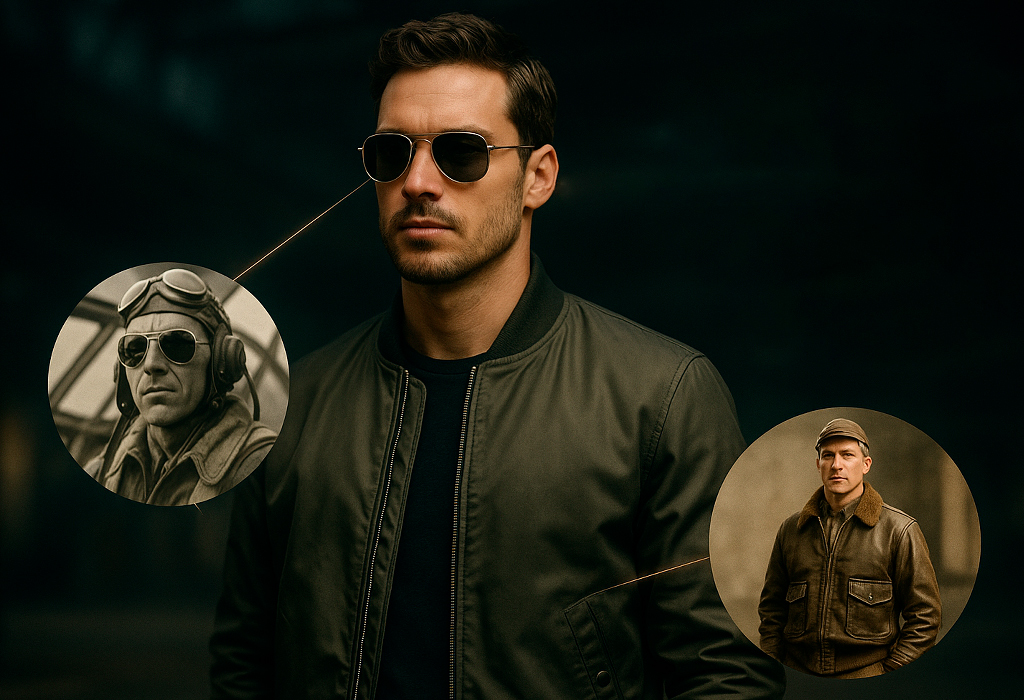
2. The Bomber Jacket

(U.S. Army Air Service & Air Corps, WWI–WWII)
Open-air cockpits meant freezing altitudes. The solution? Thick leather jackets with tight cuffs, warm linings, and high collars.
Post-war, bomber jackets became synonymous with masculinity—and later, movie star cool (see: Top Gun). The rugged cut still screams confidence.
3. Chino Pants

(British & American Military)
Born out of the need for lightweight, dust-colored gear in India, “chinos” earned their name from the Chinese cloth used in production. Adopted by the U.S. military and brought home by soldiers, chinos quickly earned a place in business-casual wardrobes.
4. Pea Coat

(European Navies, 18th–19th Century)
That sleek wool coat you wear in winter? It’s a naval classic. Heavy Melton wool, double-breasted front, and hip-length cut made it ideal for cold sea winds.
Now? It’s a timeless urban staple that still commands authority.
5. Trench Coat

(British Army, WWI)
From muddy battlefields to luxury runways, the trench coat began as a waterproof upgrade to heavy greatcoats. Features like epaulettes, D-rings, and storm flaps weren’t decorative—they were survival tools.
Wearing one today is pure understated power.
6. Cargo Pants

(British & U.S. Military, 1930s–40s)
Thigh pockets weren’t a style statement—they held ammunition and field gear. Adopted by U.S. paratroopers and later embraced in 1990s streetwear, cargo pants still serve one purpose: functionality.
And men love function.
7. Duffel Coat

(British Navy, WWI & WWII)
Named after the thick wool from Duffel, Belgium, this toggle-closure coat helped sailors stay warm at sea. Its boxy silhouette and utility charm made it a postwar favorite among students and creatives.
8. Desert Boots

(British Officers, WWII)
Designed for North African campaigns, these suede, crepe-soled boots were light, sand-resistant, and incredibly wearable. Introduced by Clarks after the war, they became a stylish middle ground between dressy and rugged.
9. The Wristwatch

(Widespread use: WWI)
Pocket watches didn’t work in the trenches. Soldiers needed hands-free timekeeping. The result? The mass adoption of wristwatches.
Today, a man’s watch is still a statement of precision and identity.
10. The M-65 Field Jacket

(U.S. Military, Vietnam War)
Soldiers needed one jacket that could handle wind, rain, and cold with a liner buttoned in. Enter the M-65 (adopted in 1965): a wind- and water-resistant, pocket-packed jacket with a hood that rolls into the collar. After Vietnam, it became a symbol of rebellion and rugged independence.
11. Beret

(French & British Military)
You’ve seen them on artists—but they started with elite units like French alpine troops and British paratroopers. Different colors = different regiments. Civilian wear came later.
12. Chambray Shirt

(U.S. Navy, 20th Century)
Lightweight, breathable, and easy to wash—ideal for sailors. Eventually picked up by civilians as a workwear staple. You’ll find them today at both ranches and rooftop bars.
13. CPO Shirt Jacket

(U.S. Navy, 1930s–40s)
A warm wool overshirt made for cold ocean air. Its structure and utility made it a streetwear hit decades later. Functions as both jacket and layer—perfect for fall.
14. Commando Sweater

(British Commandos, WWII)
Wool knit. Reinforced shoulders and elbows. Built for operations in brutal terrain. Civilians wear it now for its warmth, grit, and timeless ribbed texture.
15. Safari Jacket

(British Military in Africa)
With epaulettes, belts, and oversized pockets, the safari jacket was functional gear for tropical missions. Today it’s a stylish warm-weather option with a military soul.
16. Khaki Cloth & Color

(British Indian Army)
“Khaki” comes from the Hindi and Urdu word for dust—so it literally means “dust-colored.” British troops in India dyed white uniforms to blend in with terrain. The name and color stuck—and now it’s everywhere from school uniforms to summer chinos.
17. Henley Shirt

(British Rowers & Military)
Originally sported by rowers, later used by soldiers for its ventilation and comfort. The collarless, button-front Henley became a go-to base layer for men who cared about function and flair.
18. G-1 Flight Jacket
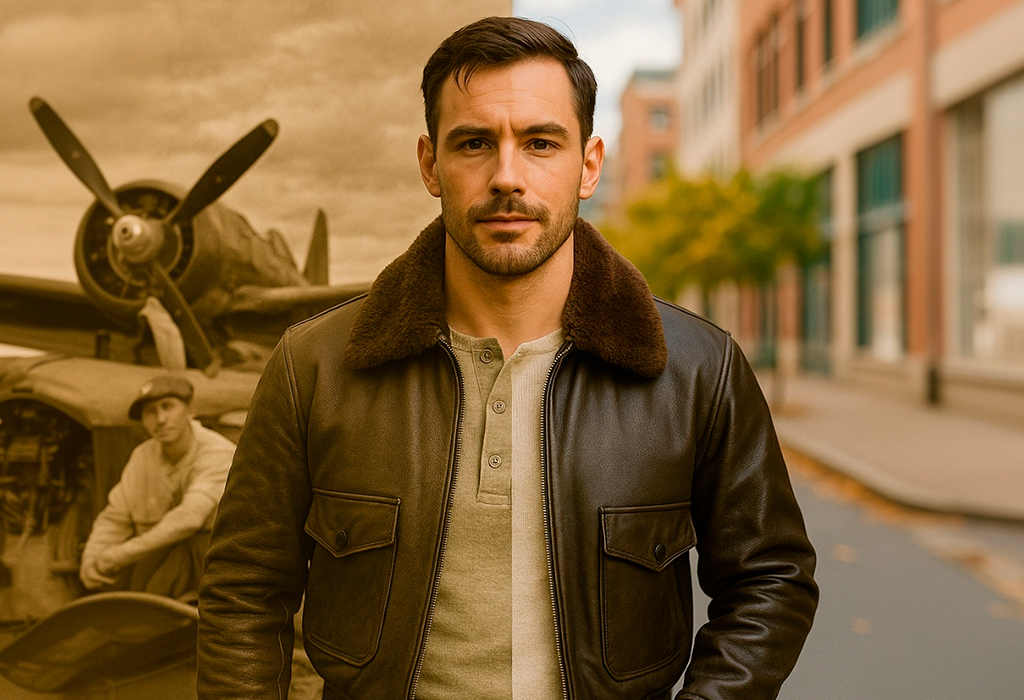
(U.S. Navy, WWII–Korea)
With a fur collar and goatskin leather body, the G-1 was aviation armor. Immortalized by “Top Gun,” it remains a masculine icon. Don’t call it retro—it’s heritage.
19. Combat Boots

(Various Militaries, 20th Century)
Built for everything from muddy trenches to rocky terrain. The modern combat boot evolved into fashion-forward versions that still retain that hard-wearing DNA.
20. Parka

(U.S. Air Force, 1950s)
The “snorkel parka” protected airmen in arctic temps. Long, insulated, and weatherproof, it later hit the civilian market and became a winter essential. Today’s fishtail parkas? Still military at heart.
Bonus: Even These Accessories Have Military Origins
- Necktie – From 17th-century Croatian soldiers.
- Blazer – Legend credits HMS Blazer’s crew, though the red jackets of Cambridge’s Lady Margaret Boat Club have the better paper trail. The navy, brass-buttoned version is pure naval style.
- Aviator Sunglasses – Created for U.S. pilots.
- Cardigan Sweater – Courtesy of Lord Cardigan (yes, that Cardigan).
- Gurkha Shorts – Nepali soldiers in British service.
- Camouflage Print – Designed to hide. Now worn to stand out.
- Epaulettes – Rank insignia turned decorative trim.
- Cummerbund – A cooler waistcoat, borrowed from Indian formalwear.
- Double-Breasted Suits – Naval heritage with a boardroom upgrade.
Military-Origin Menswear: The Quick Reference
| Item | Military OriginWhere it started | Wear It TodayEasy civilian pairing |
|---|---|---|
| T-Shirt | U.S. Navy undershirt, 1913 | Solid white or navy under an overshirt or unstructured blazer |
| Bomber Jacket | Army Air Corps flight jackets, 1930s–40s | Over a tee or sweater with dark denim |
| Chinos | U.S. Army cotton twill, 1898 onward | Khaki or olive with an oxford shirt and loafers |
| Pea Coat | European navies, 18th–19th c. | Navy wool over a turtleneck or sport coat |
| Trench Coat | British Army, WWI | Tan, over a suit or knit and trousers |
| Cargo Pants | British & U.S. forces, 1930s–40s | Slim, tapered cut with a plain tee and sneakers |
| Duffel Coat | Royal Navy | Camel or navy over chunky knitwear |
| Desert Boots | British officers in WWII; Clarks, 1950 | Suede with chinos or cuffed jeans |
| Wristwatch | WWI trenches | A simple field watch on a canvas or leather strap |
| M-65 Field Jacket | U.S. Army, 1965 | Olive over an oxford shirt and jeans |
| Beret | French & British units | Solid, dark wool—keep the rest of the outfit simple |
| Chambray Shirt | U.S. Navy utility shirt | Sleeves rolled with chinos or under a navy blazer |
| CPO Shirt Jacket | U.S. Navy, 1930s–40s | Over a tee or thin sweater as a fall layer |
| Commando Sweater | British Commandos, WWII | Olive or navy with jeans or cords |
| Safari Jacket | British forces in Africa | Light cotton or linen over a tee in summer |
| Khaki | British Indian Army, 1840s | The color—in chinos, trench coats, and field jackets |
| Henley | British rowers | A base layer under an open overshirt |
| G-1 Flight Jacket | U.S. Navy aviators | Brown leather with jeans and boots |
| Combat Boots | 20th-century militaries | Leather lace-ups with dark denim |
| Parka | U.S. Air Force N-3B, 1950s | Olive or navy over a suit or casual layers in deep winter |
| Bottom line | Built for the field, proven over decades. | Wear one piece at a time and keep the rest civilian. |
How To Wear Military-Inspired Clothes Without Looking Like You’re in Costume

Knowing where your clothes came from is fun. Wearing them well is the part that actually matters.
I spent years in uniform. Here’s the deal: a uniform works because everything matches. Take that same idea into civilian life and you look like you’re headed to a reenactment. The trick is to borrow one piece of the uniform and let the rest of the outfit stay civilian.
Rule #1 – One military piece per outfit. An M-65 with jeans and a white oxford looks sharp. An M-65 with cargo pants, combat boots, and a camo cap looks like you got lost on the way to the range. Let the jacket be the hero and keep everything around it plain.
Rule #2 – Fit beats authenticity. Real surplus was cut for a soldier wearing layers and gear underneath, so it usually runs boxy and long. If you buy the genuine article, try it on first and budget for your tailor—shortening sleeves on a field jacket or taking in a pair of chinos is a small job. If you want a trimmer cut off the rack, heritage makers like Alpha Industries still produce the M-65 and MA-1 today.
Rule #3 – Stick to the service palette. Olive, khaki, navy, tan, and brown were chosen to blend in—which means they all work together and pair with almost anything you already own. Add one bright or light piece (a white tee, a light blue shirt) so the outfit doesn’t go dull.
Rule #4 – Dress it up with one refined piece. Rugged gear looks intentional next to something clean. A trench coat over a navy suit. A CPO jacket over a merino sweater. Desert boots with pressed chinos. The contrast tells people you chose this look—you didn’t just grab whatever was on the floor.
Rule #5 – Go easy on camo. Camouflage was designed to hide you. Worn head to toe, it does the opposite. Keep it to one small piece—a cap, a pair of shorts, a jacket lining—and pair it with solids.
Wear the Heritage, Not the Rank

As a former Marine, I get asked this a lot: is it disrespectful for a civilian to wear military-style clothing?
No. Everything on this list is civilian clothing now. Nobody who served cares that you wear a pea coat or a field jacket.
What vets DO care about is when you wear something you didn’t earn. If you buy real surplus, check it before you wear it out. Remove:
- Rank insignia – chevrons, bars, and stars.
- Name tapes – that’s someone else’s name.
- Unit patches, tabs, and qualification badges – Ranger, Airborne, and Special Forces tabs especially.
- Medals and ribbons – never, under any circumstances.
That last one isn’t only about manners. Under the Stolen Valor Act of 2013, it’s a federal crime to fraudulently claim you received certain military decorations in order to get money, property, or some other tangible benefit. Owning and wearing surplus is legal. Pretending you earned what’s pinned to it is where the trouble starts.
Wear the jacket. Leave the rank to the men who earned it.
FAQ: Clothing With Military Origins
What everyday clothing has military origins?
More than most men realize. The T-shirt, chinos, bomber jacket, trench coat, pea coat, cargo pants, desert boots, wristwatch, and aviator sunglasses all started as military gear. Even the necktie traces back to Croatian soldiers in the 1600s.
Is it disrespectful for civilians to wear military-style clothes?
No. Field jackets, pea coats, and combat boots have been civilian staples for decades. The line is rank, name tapes, unit insignia, and medals—take those off any real surplus before you wear it.
What’s the difference between a bomber jacket and a flight jacket?
“Flight jacket” is the broad term for jackets made for military aviators—the leather A-2, the Navy G-1, and the nylon MA-1. “Bomber jacket” is the civilian name that stuck to the whole family, and today it usually means a short jacket with a ribbed waistband and cuffs.
Why is military-inspired style still so popular?
Because it was designed to work. Every pocket, collar, and fabric choice had a job. That makes these pieces durable, practical, and easy to wear—and the history behind them gives them a masculine edge that trend pieces can’t fake.
Final Thoughts: Is Your Closet Just a Tactical Wardrobe?

Let’s be real: You’re not storming beaches or parachuting into enemy territory.
But that bomber jacket? That pair of desert boots? That parka you live in all winter?
They were.
You’re not just wearing fashion—you’re wearing legacy. You’re carrying the utility, history, and psychology of uniforms designed to signal discipline, function, and power.
So next time someone compliments your style?
Tell them: “Thanks—it’s standard issue.”