What's that guy over there wearing?
Some style he's got…
Pink, seriously? Is it okay for guys to wear pink?
Real men don't wear PINK!
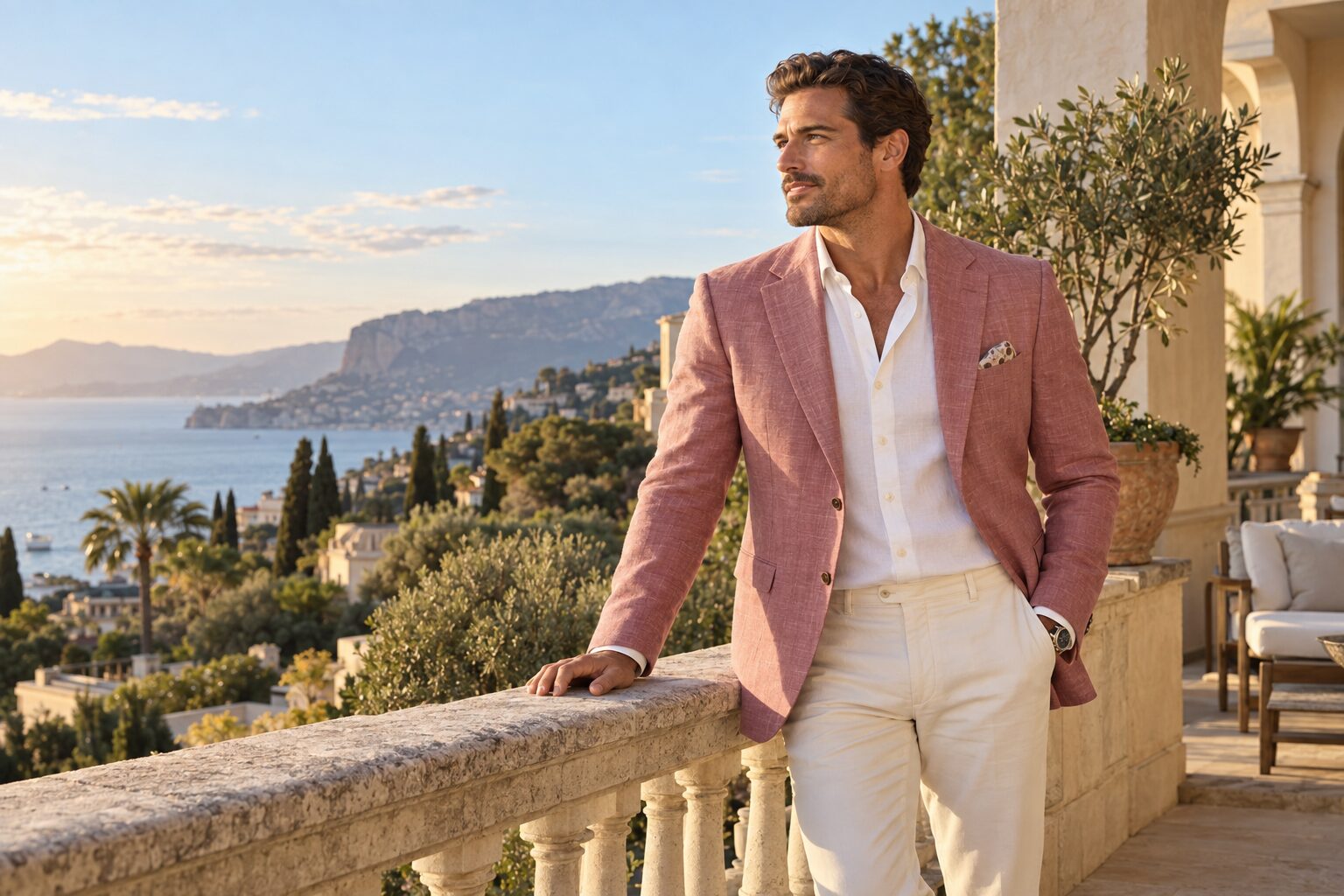
If that's how you feel about the color, here's a reality check: men wearing pink is nothing new. Guys wore it for centuries before anybody decided it was a girl's color — and some of the best-dressed men you know have a pink shirt in the rotation right now.
The “pink is unmanly” idea is a lot younger than you think. And it's fading fast.
Below you'll get 5 reasons every man should wear pink. Then the practical part most guides skip: which shade suits YOUR skin, what colors to wear it with, and how to start without feeling like you're in a costume.
Let's get into it.
1. Pink Used To Be Masculine & Popular Among Guys

History tells us that pink wasn’t always a feminine color. The director of The Museum at the Fashion Institute Technology, Valerie Steele takes it back to the 18th century. Men were known to wear pink silk suits that had floral embroideries.
Those outfits were considered very masculine at that time. Steele also mentions how pink was considered a “warlike color” since it was a “diminutive of red.” This fashion and way of thinking got lost as society changed.
Brooks Brothers introduced the first pink dress shirt back in 1900 – and for decades, almost nobody noticed. Then in 1949 the company pushed it to college women, and the college guys caught on too. By 1955, LIFE magazine was reporting that pink had taken over menswear. The pink shirt suited their so-called Ivy League look.
These examples prove how trends come and go. Pink was a man's color before, and it never really left – walk into Brooks Brothers today and you'll still find the pink Oxford on the men's side of the store.
2. You’re No Longer A Child Who Needs “Boys’ Clothes”
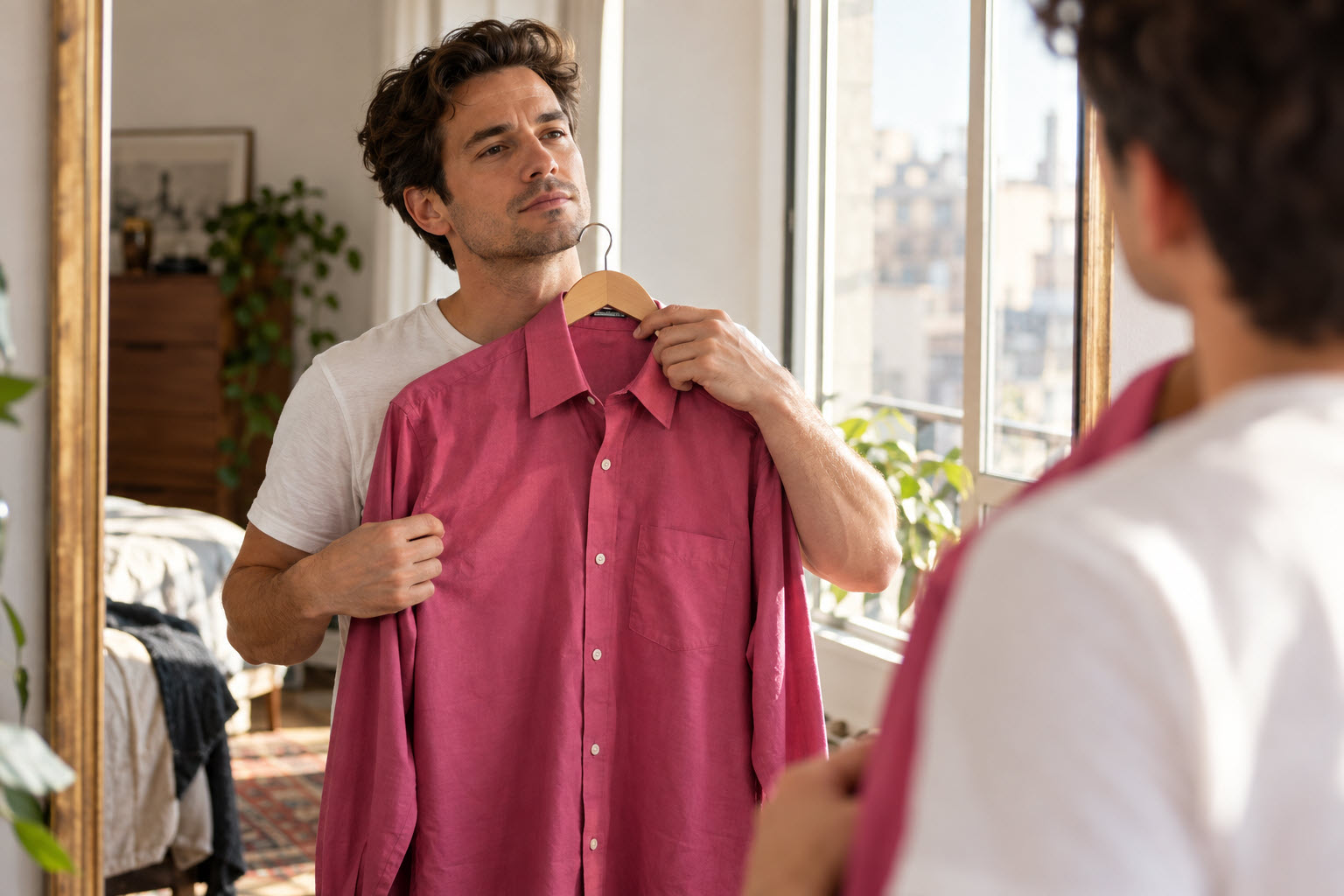
If there’s anyone to blame for making pink a “girly” color – it’s the clothing businesses from way back. They made that decision before most of us were even born.
Pink and blue weren’t originally gender-specific colors. They were often used together for infants’ clothes and accessories (pink represented rosy cheeks and youth) UNTIL manufacturers in the 1980s got greedy.
Prenatal testing meant parents could know a child’s sex before the baby was even born. So companies capitalized on this and introduced gender-specific clothing. This would mean that parents could no longer hand down a baby girl’s clothes to a baby boy and vice versa. They’d have to buy a second set. So the tradition of “pink is for girls” and “blue is for boys” began.
But here’s the thing – you’re not a young boy anymore. You’ve outgrown those blue pajamas and other boys’ clothes. You can wear what any guy wears… in any color that works. Who says pink isn’t allowed when there are pink shirts, trousers and ties for adult men? It was a myth all along – driven by capitalism.
3. Pink Catches Women’s Attention

We know women adore pink. It appears they’ve always loved it – even when it was considered masculine. But did you know our biology can sort of explain why?
Research reveals that the “pinkifcation” of girls’ clothing and toys might've been caused by innate preferences. Among people who like the color blue, women lean towards reddish-purple hues of blue while men prefer greenish-yellow ones.
The theory behind this difference is our evolutionary “division of labor.” Back in the day, men were hunters while women gathered – so picking red fruit from green leafy areas was women’s specialty. And that connects to their love for pink.
What does this mean for men? Well society may have evolved but biology hasn’t (at least not totally). Women like men in pink – some even say they love them! – simply because they’re attracted to pink. So forget all that pink-is-girly nonsense. Pink gets you the ladies. Period.
4. You Stand Out & Become More Powerful

If you are wondering how to ‘power dress‘ in business wear then pink is your ally. Pink has been used to represent power. Pink ribbons were given to those who ran in the New York survivor race in 1991 – sponsored by the Susan G. Komen Foundation.
A year later, the same kind of ribbon became the official symbol for Breast Cancer Awareness Month. Valerie Steele said other events throughout the ‘90s and 2000s brought out a “fierce” character to the color pink.
Even more recently, a 2012 survey commissioned by Cotton USA asked 1,500 male office workers in the UK about their shirts. The guys who wore pink reported earning about £1,000 more a year than the guys who preferred blue – and a quarter of them said they felt more attractive in pink. Is the shirt making them money? No. But it tells you something about the kind of man who's confident enough to wear it.
According to Stephanie Thiers-Ratcliffe, Cotton USA’s International Marketing Manager – “Pink is a color more men have been embracing recently and it's encouraging that they are not afraid to experiment with brighter colors.” The color itself is empowering. It boosts the attractiveness of guys who own their clothing.
5. Pink Goes Well With Most Colors

Knowing how to mix and match colors in clothing can be tough. Pink is a versatile color that can help you though. The fact is any skin tone works with some type of pink. Men with darker complexions look good in lighter shades such as carnation pink, cherry blossom and lavender pink. Meanwhile guys on the fair side can go with deeper shades like Persian rose and hot pink.
I recommend you to Google those types and try them all for the same item of clothing. This is how you'll determine which one gives the most contrast with your face.
A word of caution: deeper pinks tend to draw focus away from everything else so they're better for small accessories like a bowtie or pocket square.
Pink makes a great addition to outfits that have brown, khaki, monochrome or dark shades of blue. That's why it's appropriate for both formal and casual styles. Think of black-and-gray business attire – suit, tie and slacks – in which you need a dress shirt to brighten everything up. Pink does that easily.
Spring and summer are the perfect seasons to be out wearing pink. The sun makes it pop out some more and you feel great in it. Try pairing a pink polo shirt with blue jeans, or a pink Oxford shirt with white chinos. These combos allow the color to stand out and give off that warm, youthful vibe.
Using Pink Ties

What is the most seductive color?
Pink is a strong contender. It's a blend of red and white which combines passion with purity. So it's no surprise that many weddings incorporate pink neckties for the groom and groomsmen.
If it's your wedding or you're involved in the dress code – remember to match light with light and deep with deep. So a cherry blossom tie goes with a light-colored suit (beige or light/medium gray) while a hot pink tie goes with a deep-colored suit (dark tan or charcoal gray). White is the best dress shirt color for either case.
How To Wear Pink: Climb The Pink Ladder

Knowing you CAN wear pink and actually putting it on are two different things. Most guys buy one pink shirt, feel self-conscious the first time they wear it, and it goes back in the closet for good.
The fix is to build up to it. I call it the pink ladder – start with a small dose, wear it until it feels normal, then take the next step up.
- Pocket square. A pale pink silk or linen square in the pocket of a navy blazer. Nobody will notice the pink – they'll just notice you look put together. Pick one that works with your tie instead of matching it exactly.
- Socks. Patterned dress socks with a bit of pink, peeking out between charcoal trousers and brown shoes. Small, fun, and easy to hide if you lose your nerve.
- Tie. A raspberry or dusty rose tie with a white shirt and a navy or grey suit. This is where pink starts doing real work.
- Oxford shirt. The pink button-down collar Oxford – the same shirt the Ivy League guys wore in the '50s. Jeans on the weekend, under a sport coat at the office.
- Knitwear. A salmon or dusty pink crewneck over a white or light blue collared shirt.
- Pants or tailoring. Faded salmon chinos, or a pink linen jacket in the summer. This is the top rung – only climb here once the lower steps feel natural.
Here's the deal: you don't have to reach the top. Plenty of well-dressed men live on rungs three and four their whole lives. The point is that pink becomes part of your wardrobe instead of a one-time experiment.
Which Shade Of Pink Suits You? Check Your Contrast

Earlier I said every skin tone works with some kind of pink. The trick is finding YOUR pink, and the fastest way I know is to look at your color contrast – the difference between your skin and your hair.
Low contrast (light hair, fair skin). Soft, muted shades – dusty rose, salmon, pale pink. A loud hot pink will wear you instead of the other way around.
Medium contrast (brown hair, olive or medium skin). You've got the most room. Pale pink, salmon, and raspberry all work.
High contrast (dark hair, fair skin). You can carry saturated pinks like raspberry, and even fuchsia in small doses. Pastels can wash you out on their own – put a navy blazer or charcoal suit next to them and the problem goes away.
Darker complexions. Light pinks stand out beautifully against your skin – a pale pink dress shirt is one of the best-looking things you can wear. Clear raspberry works too. The muted mid-tones that sit close to your skin tone are the ones to test first.
Not sure where you land? Hold the shirt under your chin in daylight. If your face looks brighter and healthier, that's your pink. If you look tired or flushed, go a shade lighter or more muted.
| Shade | Best for | Wear it as | Pair it with |
|---|---|---|---|
| Pale / blush pink | Darker complexions, medium contrast Start here | Dress shirt, Oxford, polo | Navy, grey, charcoal, khaki |
| Salmon | Low and medium contrast | Linen shirt, chinos, summer knit | Navy, white, cream, denim |
| Dusty rose | Low contrast, olive skin | Crewneck sweater, tie, flannel shirt | Olive, tan, grey flannel, brown |
| Raspberry / deep rose | High contrast, darker complexions | Tie, knit tie, merino sweater | Charcoal, navy, grey |
| Hot pink / fuchsia | High contrast only | Pocket square, socks – accents only | Navy, charcoal, white shirt |
| Bottom line | New to pink? Start with a pale pink Oxford under navy. Go deeper and brighter only as your contrast allows – and keep loud pinks small. | ||
Use the chin test in daylight to confirm your shade.
What Colors Go With Pink? (Pants, Jackets, And Shoes)
Pink plays nice with most colors, but a few pairings do the heavy lifting. Here's what to reach for when you're building an outfit around a pink shirt – the question I get asked most.
- Navy. The safest bet there is. Navy chinos, a navy suit, dark denim. Blue cools pink down and makes it look sharp instead of sweet.
- Grey and charcoal. Grey trousers with a pale pink shirt is a classic office look. Charcoal gives a deeper pink somewhere to sit.
- Khaki and tan. Relaxed and warm. A pink Oxford with khaki chinos and brown loafers is spring in one outfit.
- White and cream. The fresh summer combo – best with salmon or pale pink linen.
- Olive. Underrated. Olive chinos with a dusty rose shirt look earthy and grown-up.
What to avoid: red and orange right next to pink fight each other, and pink from head to toe is a costume. One pink piece per outfit is plenty until you really know what you're doing.
For shoes, brown leather beats black with pink almost every time – it keeps the look warm. Save black shoes for a pink shirt under a charcoal suit.
Pink At Work – And In Fall And Winter

After white and light blue, a pale pink dress shirt is one of the most conservative shirts you can wear to the office. Under a navy or charcoal suit with a darker tie, it reads confident – not loud. If your workplace is traditional, stick to pale pink shirts and ties with pink in the pattern rather than solid hot pink.
Walking into an interview at a conservative bank or law firm? Go white or light blue and let a pink pocket square or tie do the talking. Everywhere else, a pale pink shirt is fair game.
And don't pack pink away when summer ends. Change the fabric and the shade. Pale pink linen and poplin become dusty rose flannel, merino, and lambswool. A pink crewneck under a grey tweed jacket, or a raspberry tie with a brown flannel suit, looks great in October. It's the same rule I use for fall dress shirts: heavier fabric, deeper color.
Men Wearing Pink: Quick Answers
Is it okay for a guy to wear pink?
Yes. Pink was recommended for boys in the early 1900s, and the pink shirt has been part of classic menswear since the 1950s. What matters is fit and shade – a well-fitted pink shirt beats a sloppy white one every time.
What color pants go with a pink shirt?
Navy, grey, charcoal, khaki, and olive. Navy is the safest. Khaki is the most relaxed. Stay away from red or orange pants.
Does wearing pink make a man look less masculine?
No – how you wear it does. A pink shirt that fits your shoulders, tucked into well-cut trousers with good shoes, looks masculine. A baggy pink shirt looks sloppy, same as it would in any color. Get it tailored.
So wear pink with pride. Let's save this color from the stigma that came out of corporate greed. When it's worn the right way – pink makes any good style an awesome one.
Click below to watch the video – 5 Reasons All Men Should Wear Pink