Exploring the psychological meanings behind the color brown in men's fashion.
Examining the effect a brown men's suit has on people.
An Introduction to the Brown Men's Suit
“I cannot pretend to feel impartial about colors. I rejoice with the brilliant ones and am genuinely sorry for the poor browns.”
– Winston Churchill
In the larger scheme of menswear, the brown suit loses out largely to the black or the navy blue suit. In fact, the brown suit is not most mens first choice for the office.
Up until the early 1980's, brown suits were actually frowned upon for business wear and this still holds true among some older business men.
Browns have largely been seen as an academic, or casual color for a suit. The first public figure to largely change this was former U.S. President Ronald Reagan who wore brown suits as his signature color.

Since then, the brown men's suit has seen a slight resurgence in popularity that continues to this day.
Browns are often considered less formal than their darker companions, yet the men's brown suit can provide a nice base color. Light browns and tans can evoke almost a tropical feel, while chocolate browns have more of a warm country side emotion to them.
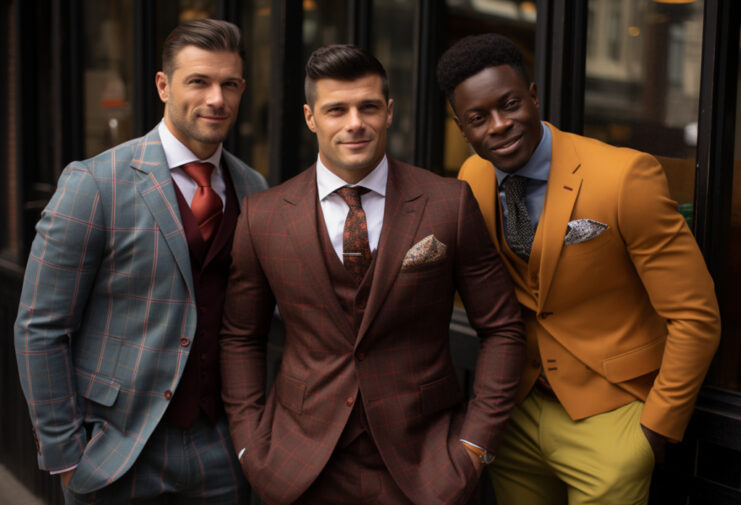
The brown suits also provide a welcome relief from a sea of navy, gray and black suits. When worn properly browns quickly set a gentleman apart from the vast majority of men.
Brown is a neutral, versatile hue that coordinates well with many fall, or winter, colors. Here's a better guide to coordinating your dress shirts to the season. Most variations of blue also look very becoming against a shade of brown.
Browns and Their Connection to Menswear
A brown suit reflects the colors of nature, reminding us of the earthy tones of soil, trees and animals.
For this reason it is often seen as unpretentious and genuine. Brown is also perceived as a very manly color.

The deep hues of mahogany, oak and walnut often associated with “man caves” work well in menswear as well. These dark browns are associated with a grounded, no-nonsense personality. But combining too many heavy tones can also come across as dreary or morose.
Lighter brown tones such as Tan or Taupe are also a nice alternative for the brown suit. These colors convey a man with simple, basic, needs. When worn correctly, the gentleman in tan comes off as classic, timeless and comfortable in his men's personal style.
Click here to read which suit colors you need to buy for your wardrobe.
Want more?
Discover How The Right Image Helps You Make More Money, Attract Women, & Command Respect
Learn the secrets of style in a structured environment leveraging my proven step-by-step master programs.