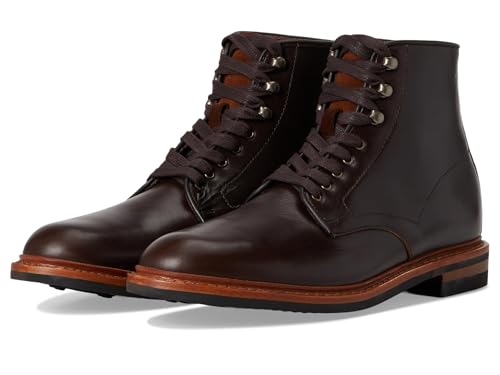
The 10 Best Winter Shoes For Men In 2026 (For Every Budget And Build)
Ever buy a pair of “winter boots” that looked bulletproof in the photo, then felt ice water creep across your toes the first morning you stepped off a curb into gray slush? By lunch your socks are wet. By five o'clock your feet are blocks of ice. And by February the road salt has painted white rings across the leather. That's what cheap winter shoes do — they quit on the first bad day.
Here's the thing. The best winter shoes for men and the $50 knockoffs look almost identical on a product page. What separates them is hidden: sealed waterproof construction instead of a spray-on coating, insulation measured in grams, a rubber outsole that actually bites, and enough room inside for a real wool sock. You can't see any of that in a thumbnail.
So here's the deal. Below are the 10 best winter shoes for men in 2026 — from a snow boot that goes on sale for about $65 to a welted Allen Edmonds boot you'll wear for a decade, plus a pair of overshoes for the guy who has to wear dress shoes no matter what the forecast says. Every pick comes with the construction facts that earn its spot, an honest drawback, and the type of man it suits. After the list, I'll show you how to wear winter boots so you look like you came from the office, not the ice-fishing shack.
Real Men Real Style is reader-supported. If you buy through the links in this article, we may earn a commission from Amazon at no extra cost to you. We only recommend winter shoes and boots we'd put in our own closets.
The Best Winter Shoes For Men At A Glance
10 Winter Shoes, Side By Side
Warmth, weatherproofing and price at a glance
The Pick
Best For
Warmth
Weatherproofing
Approx. Price
Timberland 6-Inch Premium#1 Lace-up boot
One pair for the commute, errands and weekend snow Best overall
400g PrimaLoft
Seam-sealed leather
$200–$220
Sorel Caribou#2 Pac boot
Brutal cold and deep snow Warmest
9mm felt liner, rated -40°
Rubber shell + sealed nubuck
$195–$250
The North Face Chilkat V 400#3 Snow boot
Walking to work through unplowed snow
400g Heatseeker Eco
Seam-sealed leather & suede
$130–$170
Columbia Bugaboot III#4 Snow boot
Tight budgets and beater duty Best value
200g + Omni-Heat, rated -25°F
Seam-sealed leather + molded shell
$65–$130
Blundstone #566 Thermal#5 Chelsea boot
Wet city winters, smart-casual days
Thinsulate + sheepskin footbed
Waterproof leather, sealed seams
$230–$250
Allen Edmonds Higgins Mill Weatherproof#6 Dress boot
The office, for the next ten winters Investment pick
Uninsulated
Sealed 360° Storm Welt
$450–$550
SWIMS Classic Galosh#7 Overshoe
Men who wear dress shoes every day
None
Natural rubber overshoe
$70–$100
Sperry Drake 6"#8 Duck boot
Preppy style in a wet winter
Lined, light warmth
Rubber shell, waterproof
$130–$150
KEEN Revel IV High Polar#9 Winter hiker
Wide feet, big-and-tall guys, winter hikes
400g KEEN.Warm, rated -40°F
KEEN.Dry membrane
$105–$210
Muck Arctic Sport Mid#10 Rubber boot
Shoveling, firewood and deep slush
5mm neoprene, rated -40°F
Rubber & neoprene, no seams to leak
$125–$180
Bottom line
Most men need two pairs: one serious snow boot (Sorel, Chilkat or Muck) and one boot smart enough for the office (Blundstone or Allen Edmonds).
Prices are approximate and change often on Amazon by size, color and sale.
What Separates A Great Winter Shoe From A Cheap One
First, clear up the biggest misunderstanding in winter footwear: “water-resistant” and “waterproof” are not the same thing. Water-resistant means the leather was treated to shed a light rain for a while. Waterproof means water can't get in — because of sealed seams, a membrane bootie, or a rubber shell. In ankle-deep slush, only the second one keeps your socks dry.
Sealed waterproofing. Look for the words “seam-sealed,” a named waterproof membrane, or a rubber lower shell. A boot that's just “treated leather” will eventually soak through where the upper meets the sole. Check the tongue too — a gusseted tongue is sewn to the sides of the boot so snow can't sneak in between the laces.
Insulation measured in grams. Synthetic insulation is rated by what one square meter of the material weighs, so a higher number means a warmer boot. Use this as your guide: 100–200g if you're moving (walking to the train, running errands); 400g if you spend time standing still in below-freezing weather; 600g or more — or a removable felt liner — if you're barely moving in deep cold. An unlined leather boot has zero, and your wool socks do all the work.
A rubber outsole with real lugs. A leather sole on an icy sidewalk is a pair of skates. You want a soft winter rubber compound and lugs around 4–5mm deep. Flat, hard soles slide. A studded rubber sole like Dainite is the dressy compromise.
Room for a wool sock. This is where most guys blow it. A boot that fits perfectly with a thin dress sock will crush a cushioned merino sock and choke off circulation — and a tight boot is a COLD boot. Try boots on in the afternoon, wearing the sock you'll actually wear, and look for a locked heel with about a thumb's width of space in front of your big toe.
The right height. A 6-inch boot handles city slush and a few inches of fresh snow. If you shovel, or snow drifts past your ankles where you live, go 8 inches or taller. Otherwise the snow goes over the top and melts inside.
Every pair below clears that bar.
#1 Best Overall — Timberland 6-Inch Premium Waterproof Boot
There's a reason you see this boot on construction crews and on guys in topcoats outside a steakhouse. The Timberland Premium 6-Inch is fully waterproof — premium leather uppers with seam-sealed construction — and it carries 400 grams of PrimaLoft insulation, the sweet spot for a man who walks and stands outside in real winter cold. Add a padded leather collar, a steel shank for arch support, a removable anti-fatigue footbed and a rubber lug outsole, and you have the most complete all-round winter boot for around $200 to $220.
The classic wheat nubuck is the icon, and it's also the most casual color. If you want this boot to work with chinos and a wool overcoat, buy it in black or dark brown — darker leather reads cleaner and hides salt stains better. Wear it with dark denim or heavy twill and it looks deliberate, not like you just came off a job site.
Honest drawback: it runs large. Timberland itself tells you to size down half a size, or a full size if you wear a 12 or larger. Ignore that and your heel slips, which means blisters by week two. And that wheat nubuck shows every salt line, so brush it after every wet day.
Best for: the man who wants ONE pair to handle the commute, errands and weekend snow.
The boot that's been shoveling driveways since 1972
Sorel built the Caribou in 1972 for one job: keep your feet warm while you shovel the sidewalk after a mid-winter storm. The waterproof nubuck upper is seam-sealed to a handcrafted vulcanized rubber shell. Inside sits a removable 9mm felt inner boot with a sherpa pile snow cuff, and under your foot there's a 2.5mm felt “frost plug” that blocks the cold coming up from frozen ground. Sorel rates it to -40°. Expect to pay around $200 to $250.
This is a pac boot — rubber bottom, leather top, thick liner — and it belongs anywhere snow gets measured in feet. Pull the liners out every night so they dry by morning. Style it like the workhorse it is: jeans, a flannel shirt, and a parka or a waxed field coat.
Honest drawback: it's heavy and clunky. Plenty of owners say it's too much boot for everyday wear, and they're right — this is not the pair for a two-mile walk or an office. Keep it for the deep stuff and pair it with a lighter boot from this list for everything else.
Best for: the man who lives where -10°F is a normal Tuesday, or who stands still outside for long stretches — shoveling, ice fishing, cheering at an outdoor hockey game.
#3 Best For City Snow Commutes — The North Face Chilkat V 400
The Chilkat V 400 packs the same 400 grams of insulation as the Timberland, but in a lighter, more cushioned boot that walks like a hiker. You get full-grain waterproof leather and suede uppers, seam-sealed construction, The North Face's Heatseeker Eco insulation, a compression-molded EVA midsole and a Surface Control rubber outsole built for winter conditions. The pair weighs about 3 pounds 2 ounces, and it sells for roughly $130 to $170.
Small details tell you who designed it: a heel clip for snowshoes and a D-ring for gaiters. In the city, that translates into the boot for the guy who walks 20 minutes to the train on sidewalks nobody plowed. Pick the black and grey colorway — it looks far less “mountain” next to a dark parka and jeans than the brown does.
Honest drawback: it looks like outdoor gear because it IS outdoor gear. It won't dress up past jeans and a casual jacket, so keep a pair of shoes under your desk and change when you get in.
Best for: the commuter who walks through snow every day and puts comfort ahead of polish.
List price is about $130, but the Bugaboot III goes on sale often, regularly landing between $65 and $90. For that money you get a waterproof leather upper with seam-sealed construction, an injection-molded Techlite shell, 200 grams of insulation backed by Columbia's Omni-Heat reflective lining, and an Omni-Grip rubber outsole. Columbia rates it to -25°F, and it weighs a reasonable 24.5 ounces per boot in a size 9.
Two hundred grams plus a reflective lining is plenty for a man who keeps moving — dog walks, clearing the front steps, hauling the kids up the sledding hill. It also comes in a dedicated wide version, and the size run goes up to 17, which is rare at this price.
Honest drawback: the look. Webbing, nylon and bright accent colors make it read sporty. Buy it in all black and it disappears under jeans. And 200 grams won't carry you through an hour of standing still in serious cold, so add a heavier wool sock on those days.
Best for: the guy on a tight budget, or the man who wants a beater snow boot to save his nicer pair.
#5 Best Winter Chelsea Boot — Blundstone #566 Thermal
The pull-on boot that goes from slush to a dinner date
The #566 is Blundstone's classic Chelsea, winterized. It uses premium waterproof leather, water-resistant elastic side gussets with latexed seams, a Thinsulate lining, and a removable genuine sheepskin footbed sitting on a durable TPU outsole. Expect to spend around $230 to $250.
Why is it on a style site's list? Because it's the sleekest boot here that still handles real winter. The slim profile disappears under straight-leg jeans or chinos, it looks right with a navy peacoat, and it pulls on and off in two seconds — a gift at airport security or in any home where shoes come off at the door.
Honest drawback: the outsole tread is shallow compared with a lugged snow boot, so take it easy on sheet ice. It's also ankle-height, which means deep snow goes over the top. And if you have a wide foot, Blundstone recommends ordering a half size up.
Best for: the city guy with a wet, slushy winter who wants one boot for smart-casual workdays and weekends.
#6 Best Investment Boot For The Office — Allen Edmonds Higgins Mill Weatherproof
The Higgins Mill has been one of Allen Edmonds' best sellers since it launched in 2016, and the weatherproof version fixes the one thing that kept it out of the snow. It pairs waterproof leather with Allen Edmonds' 360° Storm Welt — a welted construction with sealed seams — plus a cork footbed that molds to your foot and an all-weather rubber sole (Dainite studs or a lug, depending on the version). Because it's welted, a good cobbler can resole it instead of you throwing it away. It costs around $450 to $550 at full price.
The design takes its cues from vintage logging boots — a derby boot with speed hooks — but in smooth dark leather it reads smart-casual. Wear it with grey flannel trousers, an oxford shirt and a navy topcoat. This is the boot for the man whose office is business casual and whose commute includes slush.
Honest drawback: it isn't insulated. It's a weatherproof dress boot, not a snow boot, so on a long walk below freezing you need thick wool socks. It's also the priciest pick here — Allen Edmonds runs sales several times a year, so wait for one if you can.
Best for: the business-casual professional who wants one boot to carry him through the next ten winters.
#7 Best For Men Who Wear Dress Shoes — SWIMS Classic Galosh
Keep your best shoes, skip the salt
Sometimes the right winter shoe is the one you already own. SWIMS, a Norwegian brand, took the old rubber overshoe your grandfather wore and slimmed it down. The Classic Galosh is natural rubber with a flocked inner layer that protects your shoes (and gives them a light buff every time you pull the galosh off) and a slip-resistant sole. It goes on over your oxfords at the front door and comes off in the lobby. Most colors sell for around $70 to $100.
Sizing goes by range rather than exact size — Medium fits roughly US 6 to 7.5, Large 8 to 9.5, XL 10 to 11.5 — so check the chart against the shoes you'll wear underneath. With a suit, stick to black or navy.
Honest drawback: there's zero insulation, and the low cut means deep snow goes right over. SWIMS also says not to wear them over suede shoes. And stretching them over a chunky-soled shoe takes practice.
Best for: the lawyer, banker or salesman who wears leather-soled dress shoes five days a week.
A duck boot splits the job in two: a rubber lower shell handles the slush, and a leather upper keeps the boot flexible enough to walk in all day. Sperry's Drake follows that formula with a waterproof build, a multi-density removable footbed, a molded Wave-Siping outsole and a shaft about 7 inches tall. It sells for around $130 to $150.
Duck boots are preppy New England through and through. Wear them with khaki chinos, a Shetland sweater and a quilted vest or barn coat. Let straight-leg trousers fall over the shaft, or give slim chinos a single clean cuff that sits just above the laces.
Honest drawback: the standard Drake is lined but light on warmth. If your winters regularly drop below about 20°F, buy the Drake 6″ Thinsulate version instead. And Wave-Siping was designed for wet boat decks — it grips wet pavement fine, but not ice. Sperry also rotates its duck boot models often, so if this one sells out, look for the same rubber-shell build with “Thinsulate” in the name.
Best for: the preppy dresser in a wet winter that's cold but not brutal.
#9 Best For Wide Feet And Big Guys — KEEN Revel IV High Polar
KEEN builds on its “Original Fit,” which leaves generous room across the forefoot so your toes can splay — exactly what a wide foot needs in a thick sock. The Revel IV High Polar adds 400 grams of KEEN.Warm insulation rated to -40°F, a KEEN.Dry waterproof breathable membrane, three heat-trapping layers underfoot, and a Polar Traction outsole with 5mm multi-directional lugs for snow and ice. Expect to pay around $105 to $210, depending on the sale.
For bigger men, the stability shank and aggressive lugs matter more, because every step puts more weight on the sole. There's a proportion point too: a sleek, skinny boot under a broad frame makes your feet look small. A substantial boot like this one balances a big build. The Revel IV line also runs up to a size 17.
Honest drawback: mesh panels and hiker styling make it look outdoorsy, so it's a weekend and trail boot, not an office boot. Those mesh sections also hold onto salt stains, so rinse them with fresh water after a slushy day.
Best for: men with wide feet, big-and-tall guys, and anyone who hikes in winter.
#10 Best For Chores And Deep Slush — Muck Arctic Sport Mid
Muck boots skip leather entirely. The Arctic Sport Mid is a pull-on rubber-and-neoprene boot built around a 5mm neoprene bootie with a fleece lining, a molded rubber outsole, and a comfort rating down to -40°F. Below the shaft there's nothing to leak, which makes it as waterproof as footwear gets. It runs about $125 to $180, depending on size and color.
This is the boot you keep by the back door for shoveling the driveway, splitting firewood, or walking the dog through six inches of slush. When it's caked in salt and mud, hose it off. The Mid height is easier to pull on and walk in than the Tall version.
Honest drawback: zero style, and neoprene doesn't breathe — walk far in these, or wear them indoors, and your feet will sweat. It's a tool. Don't wear it to brunch.
Best for: the homeowner with a driveway, a dog and a woodpile.
How To Wear Winter Boots Without Looking Like You're Headed To A Job Site
Rule #1: Fix your trouser break first. Trousers that pool on top of a boot look sloppy and soak up salt water. Have your tailor hem the trousers you wear with boots so they rest on the boot with no break or a slight one, and taper the leg opening so the hem sits over the boot instead of flaring around it. It costs little and it's the one fit fix that changes the whole silhouette. For jeans, one clean cuff is fine — a thick stack of fabric is not.
Rule #2: Match the boot to your build and your fabrics. Chunky boots like the Sorel, KEEN and Muck balance a big frame and pair with heavy fabrics — denim, flannel, a parka. On a slim or shorter man, a giant pac boot makes the legs look stubby, so go slimmer: the Blundstone, the Higgins Mill, or the Timberland in dark leather. Heavy boots go with heavy fabrics; sleek boots go with wool trousers.
Rule #3: Dress it up or down with what surrounds it. Darker, smoother leather is dressier. A black Chelsea with charcoal wool trousers and a navy topcoat works at the office. Wheat nubuck with jeans and a chore coat is a weekend look. Galoshes over your oxfords cover the suit days.
One practical rule: keep a pair of dress shoes under your desk and change at the door. And don't tuck your jeans into lace-up boots unless you're actually walking through snow that's deeper than your ankles.
How To Make Your Winter Boots Last More Than One Season
Road salt is the killer. Wipe salt lines off the same day with a cloth dampened in a 50/50 mix of water and white vinegar, then let the boots dry at room temperature, stuffed with newspaper or cedar shoe trees. Never dry leather on a radiator or in front of a space heater — fast heat cracks it. Pull out felt liners and removable footbeds every night so they dry separately.
If you can, own two pairs and rotate them, so each pair gets a full 24 hours to dry out. Condition smooth leather a few times a season, and re-apply a waterproofing spray to suede and nubuck before the first snow. Rubber shells and Muck boots just need a rinse with fresh water. Any Marine will tell you: take care of your feet, and they'll take care of you.
Winter Shoe Questions Men Actually Ask
How many grams of insulation do I need in winter boots?
About 200 grams if you're active — walking, commuting on foot, hiking. Around 400 grams if you spend time standing still on below-freezing days; the Timberland and the Chilkat V 400 sit right there. If you're barely moving in deep cold, go 600 grams or more, or a felt-lined pac boot like the Sorel Caribou. Your socks count too.
Can I wear regular leather boots in the snow?
In light snow and slush, yes — as long as the leather is treated and the sole is rubber. Leather soles turn an icy sidewalk into a skating rink, and salt eats untreated leather. A weatherproof dress boot like the Allen Edmonds Higgins Mill gives you the look without the risk.
Should winter boots be a size bigger?
Not automatically. You need room for a thicker sock, not a bigger boot. Try them on with your winter sock and look for a locked heel and a thumb's width in front of your toes. Some boots already run large — Timberland recommends going half a size down.
Can you wear winter boots with a suit?
A sleek, dark Chelsea or dress boot with slim, properly hemmed trousers works with a business suit in winter. For formal suits and big meetings, wear galoshes over your dress shoes and take them off at the door. Snow boots with a suit? Never.
Pick One And Wear It This Week
Most men need two pairs of winter shoes: one serious snow boot and one boot smart enough for the office. If you can only buy one right now, start here:
City guy with a wet, slushy winter: the Blundstone #566 Thermal.
Snow-belt guy who walks a lot: the Timberland 6-Inch Premium or The North Face Chilkat V 400.
Man in a suit every day: SWIMS galoshes over the dress shoes you already own.
Check the forecast, pick your pair, and order it today. The first real storm isn't going to wait for you.
I'm Antonio Centeno, the founder of RMRS. I'm a former Marine Corps Officer with a BA in Evolutionary Biology and Philosophy (Cornell College 98') and an MBA from The University Of Texas at Austin (07'). I studied the Science of Style in London, Hong Kong, and Bangkok and have created over 5000 videos/ articles to help men dress better. Click here to discover more about me and our mission here at RMRS.
Ready to earn more money and command respect with the right clothing? Want to start dressing sharp today? Click here to discover The Style System , the BEST Professional Style Course on the planet!