Overcoat vs. Peacoat vs. Parka: Which One Fits Your Lifestyle?
Every man needs a winter coat—but not every man needs the same one.
You’ve seen guys walking around in sharp wool overcoats, rugged parka shells, and thick double-breasted peacoats… and wondered which is right for you.
Style? Warmth? Versatility? Your choice says something about who you are and how you live.
Let’s break down overcoat vs. peacoat vs. parka—and help you figure out which one actually fits your life, not just your wardrobe.
Why This Matters
You can fake a lot with layering and accessories, but your outerwear does the heavy lifting in both style and comfort. If you pick the wrong coat, you’ll end up:
Overheating indoors or freezing outside
Struggling to match it with what you wear daily
Looking out of place in social or professional settings
But nail the right winter coat, and you get a signature piece—something that elevates your look every time you step outside.
This guide is here to make sure you don’t just grab what’s trendy. You’ll walk away knowing exactly which coat best matches your climate, your wardrobe, and your lifestyle.
1. Overcoat: Classic, Commanding, and Tailored
Best For: Professionals, city commuters, men who dress sharp daily
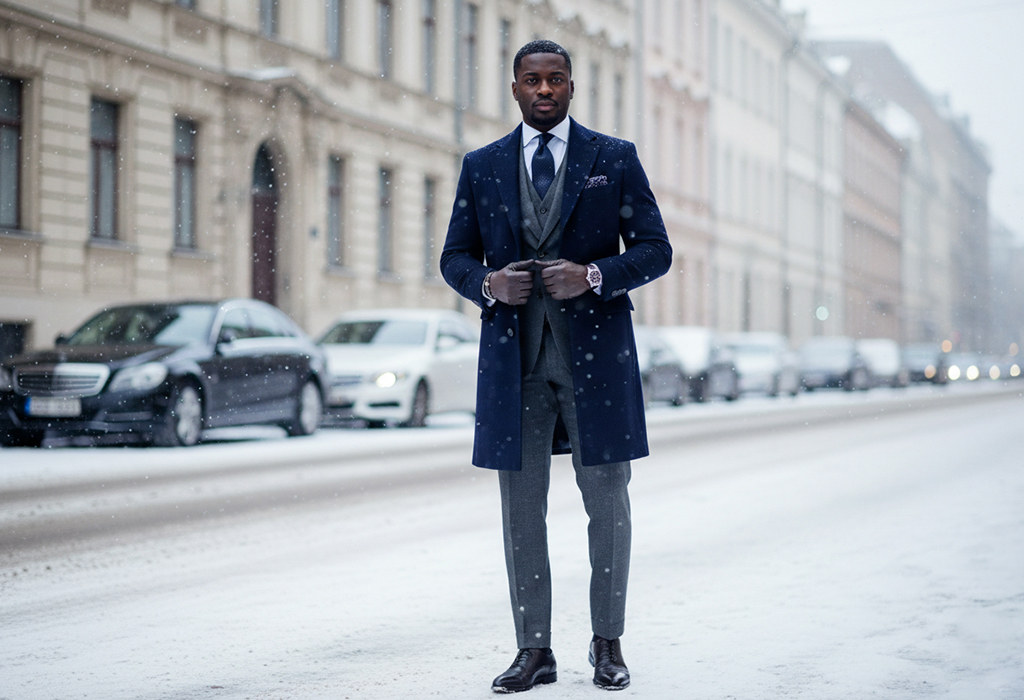
The overcoat is a statement of polish and purpose. Traditionally made of heavy wool or a wool-cashmere blend, it’s cut to fit over a suit or blazer—longer in length, usually below the knee, with structured shoulders and a single or double-breasted front.
Why Men Choose It:
Instantly formal—perfect over a suit or business casual layers
Clean silhouette that flatters most body types
Often worn in darker, neutral colors like charcoal, navy, or camel
What to Know:
Weight: Heavier than other coats. Great for wind, less ideal for snowstorms.
Fit: Shouldn’t be boxy. Tailored is key—even if it’s over another jacket.
Functionality: Limited insulation. It’s stylish, not survival gear.
Pro Tip: Start with the same size as your suit jacket—most brands cut overcoats to go over a suit of that size. Try it on with the jacket underneath. If it won’t button, or it pulls across your back when you reach forward, go up one size.
2. Peacoat: Timeless, Rugged, and Adaptable
Best For: Smart-casual guys, creatives, weekend explorers
The peacoat’s origins are military—specifically naval. Shorter than the overcoat, hitting mid-thigh, and usually made from thick Melton wool, the peacoat is known for its double-breasted front, wide lapels, and anchored buttons.
Why Men Choose It:
Looks sharp with jeans or chinos—super versatile
Classic masculine shape that’s stood the test of time
Warm enough for most winter cities, especially layered over knitwear
What to Know:
Fit: Snugger through the body than an overcoat. Not ideal for wearing over a suit.
Weather: Excellent wind resistance, moderate warmth. Add layers for real cold.
Mobility: Easier to move in than longer coats.
Anecdote: My first peacoat was a hand-me-down from a retired Navy officer. Heavy, navy blue, and still sharp 30 years later. I wore it on dates, to meetings, even to funerals. It always worked.
3. Parka: Practical, Insulated, and Built for Winter
Best For: Harsh climates, casual wearers, guys who walk a lot in the cold.
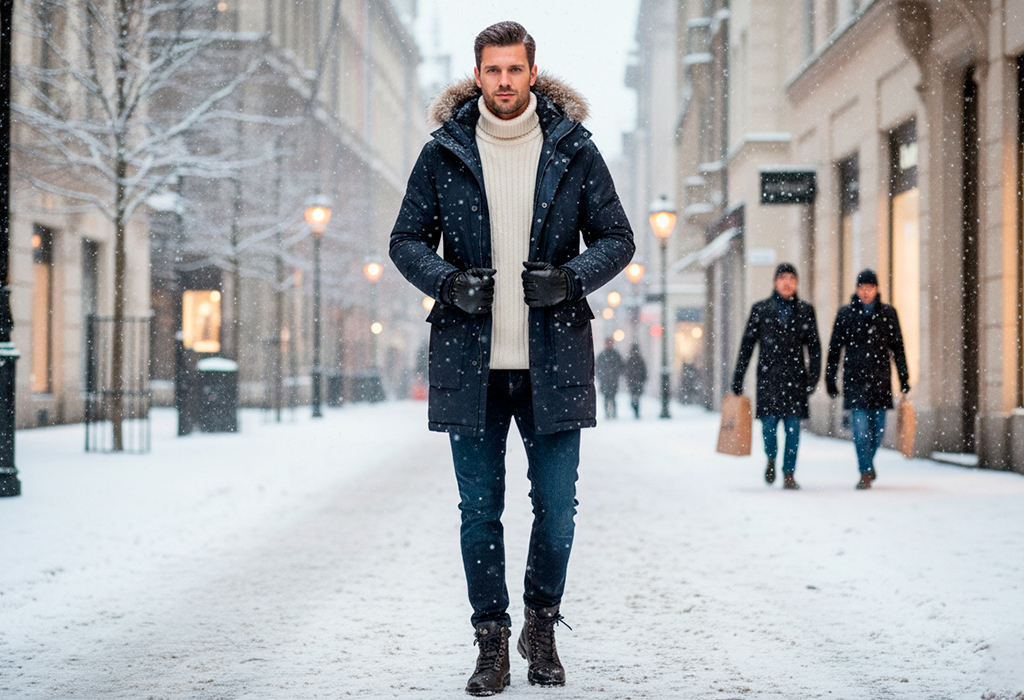
The parka is the survivalist’s coat—originally designed by the Caribou Inuit and updated over the years by Arctic explorers and military designers. It's long (covers the butt), often hooded (sometimes fur-lined), and packed with down or synthetic fill for insulation.
Why Men Choose It:
Serious warmth, even in sub-zero temperatures
Built-in hoods and pockets make it extremely functional
Easy to throw on over anything—sweaters, hoodies, base layers
What to Know:
Style: Very casual. Not ideal for suits or formal occasions.
Fit: Bulky by nature. Some modern versions slim it down.
Durability: Often water-resistant or waterproof. Built to last.
My Rule: If you walk 20 minutes to the train every morning and your city sits below freezing for weeks at a time, don’t think twice. Get a parka. Style matters, but so does keeping your fingers.
Overcoat vs. Peacoat vs. Parka: Head-to-Head
Here’s how the three stack up, row by row.
Overcoat vs. Peacoat vs. Parka
The three winter coats, side by side
OvercoatThe tailored coat
PeacoatThe naval classic
ParkaThe cold-weather workhorse
Length
Knee to just below the knee
Hip to mid-thigh
Mid-thigh or longer, covers the seat
Formality
Business and formal
Smart casual
Casual
Warmth
Warm in heavy wool, and it covers your legs
Warm through the torso; legs exposed
Warmest of the three: down or synthetic fill
Weather
Handles wind; not built for slush or heavy snow
Strong against wind; wet wool gets heavy
Built for wind, snow and sleet; shell often waterproof
Made from
Heavy wool or a wool-cashmere blend
Dense Melton wool
Nylon or cotton shell over insulation
Wear it over
Suits, sport coats, sweaters
Sweaters, flannels, oxford shirts
Anything: hoodies, fleece, thermals
Hood
No
No
Usually, often with a fur or faux-fur trim
Best climate
Cold cities, short walks between buildings
Cool to cold, rarely far below freezing
Long, hard winters and time outside
Fit check
Buttons over your suit jacket; sleeves cover the jacket cuff
Close over a sweater; hem covers your seat
Room for a fleece; sleeves reach your gloves
Known for
Most formal
Best all-rounder
Warmest
Bottom line
The coat for the man who wears a suit.
The best one-coat answer for most men.
The coat for real winter.
Swipe sideways on a phone to see all three coats.
So, Which Coat Fits Your Life?
Choosing between an overcoat, peacoat, and parka isn’t just about the temperature—it’s about how you live.
Let’s break it down by lifestyle, daily habits, and real-world use cases. This is where function and identity meet.
The Overcoat Man
You’re on the move in structured environments—offices, meetings, client lunches.
You’ve got a wardrobe full of sport coats, blazers, and dress shirts. Even when you’re off duty, you lean toward polished casual: Chelsea boots, turtlenecks, dark denim.
You’ll love the overcoat if:
You frequently wear suits or tailored outfits.
You value clean lines and formality in your appearance.
You live in a city where appearance matters—think NYC, London, Milan.
You want to look taller and more commanding. (The long silhouette helps.)
You prefer timeless elegance over rugged practicality.
Avoid it if: You’re outdoors a lot in snow or slush—it won’t hold up well in extreme conditions.
“When I was stationed in Ukraine, my overcoat was my armor. Stepping into embassies, walking through snow-covered sidewalks—nothing looked sharper than that camel wool, even when the wind cut like a knife.”
The Peacoat Guy
You’re a hybrid—part classic, part casual. Your closet swings both ways: wool sweaters and jeans, Oxford shirts and desert boots.
You care about how you look, but you don’t want to overthink it. You need a coat that pulls your outfit together without trying too hard.
You’ll love the peacoat if:
You wear jeans and boots more than slacks and oxfords.
You want something stylish but low maintenance.
You like clothes with heritage—something with a story.
You need a coat that moves with you (great if you're riding a bike, walking a lot).
You live in a moderate to chilly climate where you rarely hit sub-zero temps.
Avoid it if: You need full coverage warmth or want a formal outer layer over a suit.
“The peacoat is like that friend who fits in anywhere. I’ve worn mine to a winter wedding rehearsal dinner and to grab coffee at a dockside café. Never once felt underdressed.”
The Parka Man
You live where the cold really hits. This isn’t cute flurries and chilly mornings—it’s brutal wind, ice storms, or daily snow.
Your day might involve commuting on foot, waiting at the bus stop, or spending extended time outside. You don’t care about being runway-ready—you care about not losing your ears to frostbite.
You’ll love the parka if:
You live in a place like Chicago, Montreal, or Oslo.
You walk more than drive in the winter.
You layer hoodies or thermals underneath.
You need a hood (seriously underrated in frigid weather).
You value warmth and durability over tailoring.
Avoid it if: You need to look sharp for business or want something slim and sleek.
“When I took my kids sledding in Wisconsin—20 degrees and snow coming in sideways—I didn’t bring the wool. I brought the parka. Zipped it up, flipped the hood, and stayed out for hours. It’s not fashion week material, but it gets the job done.”
Still Can’t Decide?
Here’s how to think about it:
Extreme cold your reality? Parka. Every time.
Style-first? Overcoat or Peacoat.
Warmth-first? Parka.
Live in a walkable city? Peacoat or Parka.
Need to layer over a blazer or suit? Overcoat.
Want to own just one coat? Peacoat is your best all-rounder.
Open to something else entirely? See all 20 types of jackets for men side by side, from denim jackets to duffel coats.
How Each Coat Should Fit—And Which One Suits Your Frame
Here’s the thing: the right coat in the wrong fit still looks wrong. An overcoat that hangs past your shoulders looks borrowed. A parka two sizes too big makes you look like you’re walking around in a sleeping bag. Before you buy any of the three, run these checks in the store.
Overcoat Fit Check
Try it on over your suit jacket, not a t-shirt. It should button all the way with the jacket underneath and still look clean.
The shoulder seam sits on the edge of your shoulder. Shoulders are the hardest thing for a tailor to fix—if they’re wrong, put the coat back.
Sleeves run about an inch past your jacket sleeve and cover the cuff completely.
The hem lands at the knee or just below it.
Peacoat Fit Check
Size it over a sweater, because that’s what you’ll actually wear under it.
It should sit close through the chest and waist without pulling. If the front gaps between the buttons, go up a size.
The hem should cover your seat. Any shorter and it reads like a jacket, not a coat.
Button it to the top and turn the collar up. A good peacoat closes high against the wind—that’s what sailors needed it for.
Parka Fit Check
Try it on over your thickest mid-layer—a fleece or a heavy sweater. You want room for it without the parka billowing at the waist.
Reach forward like you’re grabbing a steering wheel. The sleeves should still cover your wrists, so there’s no cold gap above your gloves.
Pull the hood up over a beanie. It should cover your forehead without blocking your side vision.
Look for a drawcord at the waist. It pulls in the bulk so you don’t look like a box.
Match the Coat to Your Frame
Fit is half of it. The other half is your build. Every coat changes your proportions, so pick the one that works with the frame you have NOW.
Shorter men: The peacoat is your friend. It ends high enough to keep your legs looking long. If you want an overcoat, keep the hem just below the knee, never down at the calf. In a parka, pick a hip-length cut over one that falls past mid-thigh.
Tall men: You can carry a full-length overcoat and a long parka. Watch the peacoat—on a long torso it can look cropped, so make sure it still covers your seat.
Slim men: The double-breasted peacoat adds width across the chest, and a structured overcoat builds up the shoulders. A big puffy parka swallows a slim frame, so choose one with a trimmer cut and less bulk through the body.
Heavier men: Go single-breasted. A double-breasted peacoat puts two rows of buttons across your widest point. A dark, single-breasted overcoat draws one long vertical line instead. In a parka, skip the shiny puffer and choose a matte shell with a cinched waist.
Get the shoulders and chest right and your tailor can handle the rest. Sleeves and hems are routine fixes on an overcoat or a peacoat.
Overcoat vs. Peacoat vs. Parka: Common Questions
Can you wear a peacoat with a suit?
You can, but it rarely looks right. A peacoat ends around your hip, so your suit jacket hangs out below it, and the snug cut fights the jacket underneath. If you wear a suit more than once or twice a week, buy an overcoat.
Is a peacoat warm enough for winter?
For most cities, yes. Dense Melton wool blocks the wind, and with a sweater and scarf underneath it handles days around freezing. Where winter means weeks of sub-zero mornings, it won’t do the job alone. That’s parka territory.
Which is warmest: an overcoat, a peacoat, or a parka?
The parka, by a wide margin. Down or synthetic fill traps far more heat than wool, and the hood covers your head. Between the other two, a heavy overcoat usually wins because it covers your legs as well as your torso. A peacoat keeps your core warm, but your legs are on their own.
How is a topcoat or a trench coat different?
A topcoat is a lighter overcoat—same cut, thinner cloth, made for fall and spring. A trench coat is rainwear: cotton gabardine, a belt, and storm flaps. Neither one replaces a real winter coat when the temperature drops hard.
Final Thoughts
A winter coat is a power move.
Not because it shouts, but because it tells the world you’re prepared—style-wise and weather-wise.
So ask yourself: What’s your environment? What do you wear underneath? How do you move through your day?
Answer those, and the right choice won’t just keep you warm. It’ll become your cold-weather signature.
I'm Antonio Centeno, the founder of RMRS. I'm a former Marine Corps Officer with a BA in Evolutionary Biology and Philosophy (Cornell College 98') and an MBA from The University Of Texas at Austin (07'). I studied the Science of Style in London, Hong Kong, and Bangkok and have created over 5000 videos/ articles to help men dress better. Click here to discover more about me and our mission here at RMRS.
Ready to earn more money and command respect with the right clothing? Want to start dressing sharp today? Click here to discover The Style System , the BEST Professional Style Course on the planet!