

Good knitwear is so much more than just your run-of-the-mill crew-neck sweaters and corporate-friendly quarter-zips. Somewhere between those two types of sweaters exists a secret third option, forgotten to some by passage of time, and concealed away by others too embarrassed to acknowledge it. No, not the familiar cardigan.
We’re talking about sweater vests.
Particularly, their ins and outs, variations, and why they’re actually rad as hell. Ok, well, maybe “rad” isn’t exactly the word we’re looking for. “Tasteful,” perhaps. Or maybe “versatile.”
The point is, sweater vests could have a much stronger presence in your wardrobe, and we’re here to vouch for them!

We know what you’re probably thinking, and no, we haven’t gone senile. In recent years, the humble sweater vest has made a bit of a comeback in some menswear spaces. While always a staple of certain strains of “trad” or “ivy style” circles, they’ve begun to re-emerge as a contemporary style staple in their own right.
But what constitutes a “sweater vest?” What are their various iterations? How can you style each effectively? And why would you even bother going for sleeveless knitwear in the first place – especially if your main objective is to capitalize on heat retention?
We’ll answer all that, and more. Read on to find out how sweater vests can work for you.
What Is a Sweater Vest?
At its core, sweater vests are simply defined as a piece of knitwear that lacks sleeves. Sans sleeves, if you will. They can be made from practically any material, including wool, cotton, mohair, linen, and synthetics or synthetic-blends. But whatever they’re made from, they always share one characteristic – no sleeves!
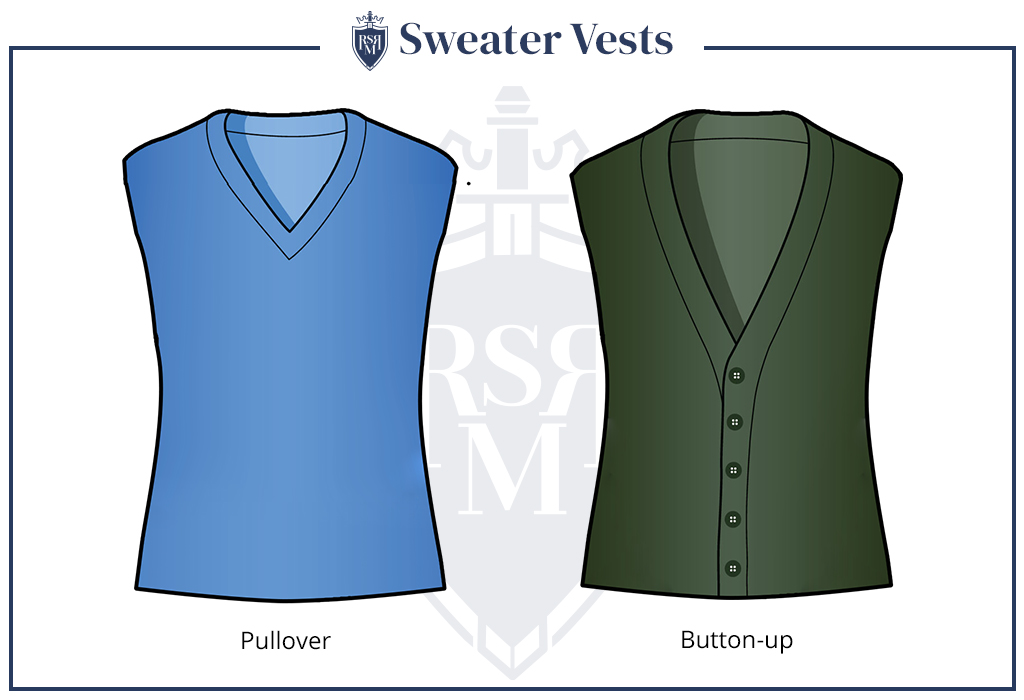
Most commonly, sweater vests tend to appear in v-neck variations, though crew-neck options do exist as well. Some sweater vests are pull-over, not unlike a standard sweater, though others will be made in a button-up configuration resembling a cardigan.
These cardigan-adjacent vests will often include pockets near the hip. The cutout where the sleeves would normally begin on either version is typically a bit wider, so as not to pull on one’s shirt sleeve and allow freedom of movement.
The Benefits of Sweater Vests
Sweater vests are an absolute dream for layering potential. In either pull-over or cardigan iterations, their lack of sleeves helps them fit a bit better under a jacket or sport coat.
Chunkier sweaters will often have thicker sleeves, which, depending on the construction of your jacket sleeve, might not be a great fit. Sweater vests remedy this, and offer bonus style points by acting as a contrasting waistcoat of sorts.
Additionally, the classic v-neck sweater vest configuration frames your neck and face admirably, and can even be enhanced with the addition of a tie to fill the space.

And let’s not forget – like any good piece of knitwear, sweater vests can potentially provide a dose of intrigue to your outfit by introducing some texture and/or pattern. Naturally, these will be determined by the material or weave.
Sweater vest cardigans will sometimes even feature unique buttons, such as horn buttons, corozo buttons, leather-wrapped shank buttons, and more. These little details go quite far to make the individual piece stand out.

Types of Sweater Vests
Like we said, there’s a large variety of sweater vest iterations, made with different materials, patterns, and weaves. Here are a handful of the most tasteful types you should probably know about. (Note: pretty much every type of sweater vest listed below can be found in either a pull-over or cardigan configuration.)
- Wool Sweater Vests
The prime example of sleeveless knitwear intended for fall and winter wear, wool sweater vests can come in even more varieties, believe it or not. Lambswool is thick and fairly economical, while shetland wool provides even more texture and warmth. Then you have ones made from less common and more luxurious materials, like cashmere, alpaca, and mohair.

- Cotton Sweater Vests
While these can weigh similarly to their wool counterparts, cotton is a more breathable fabric than most wools, meaning that sweater vests utilizing the familiar material are best for fall and springtime use. They can also lean a bit sportier, depending on the rest of the sweater’s details (see below).

- Tennis Vests
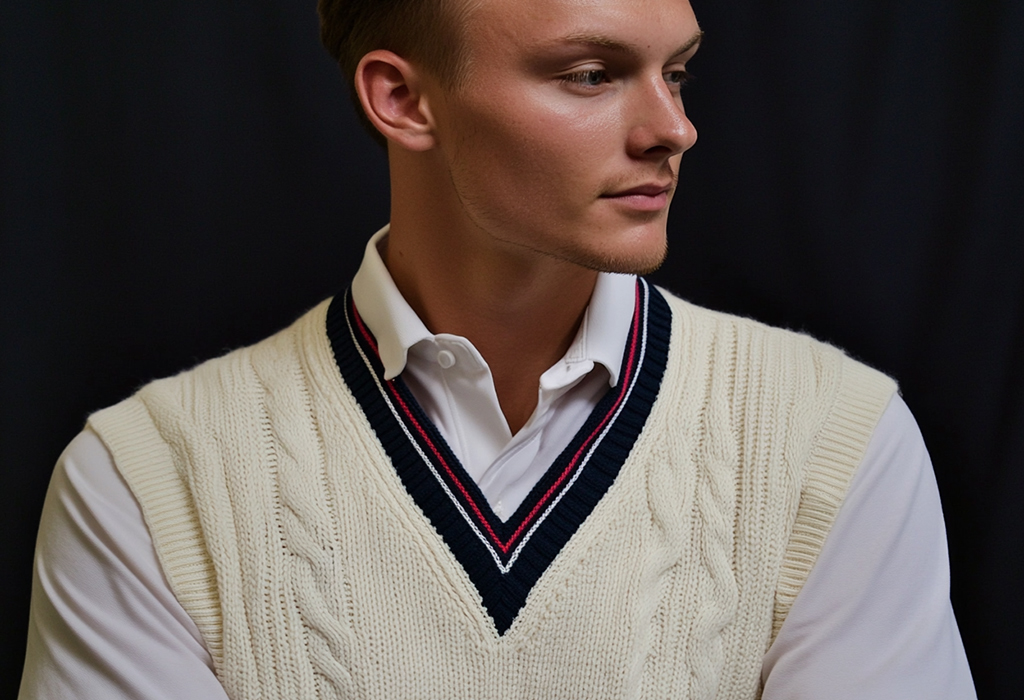
These will usually be made from either some form of wool, cotton, or a blend, but they’re undeniably preppy either way. Tennis sweater vests typically feature a deep v-neck with some sort of embellishment (like stripes) around the collar. With an elite school insignia, they can get even more ivy, and will sometimes sport elevated details like a cable-knit weave.
- Fair Isle Sweater Vests
Although Fair Isle is considered a pattern/knit style, authentic Fair Isle knitwear originates from Scotland, and is almost always made from wool, be it lambswool, shetland, or merino. Fair Isle sweater vests sport the same intricate, colorful designs as any other Fair Isle piece, without the sleeves, of course.

| Type | Best Season | Formality | Under a Jacket? | Wear It With |
|---|---|---|---|---|
| Lambswool / Shetland | Fall, winter | Casual to smart casual | Only a roomy tweed jacket or chore coat | Oxford shirt, corduroys, flannel trousers |
| Merino / Cashmere | Fall through spring | Smart casual to office | Yes. Fine-gauge slides under a sport coat or suit | Dress shirt and tie, wool trousers Most versatile |
| Cotton | Spring, fall | Casual | Yes, if it’s a fine knit | T-shirt or oxford, chinos, jeans |
| Tennis | Spring, early fall | Preppy casual | Under a navy blazer | Striped oxford, pleated chinos |
| Fair Isle | Fall, winter | Casual | Under a tweed sport coat | Solid oxford, corduroys, knit tie |
| Linen / Linen-Cotton | Summer | Casual | No. Wear it as your top layer | T-shirt, shorts, lightweight chinos |
| Bottom line | Only buying one? Get a navy or gray merino V-neck. It goes under a sport coat, over an oxford, and with a tie. | |||
Warmth and bulk depend on the knit gauge, so check the weight before layering any vest under tailoring.
How a Sweater Vest Should Fit

A sweater vest has less fabric than any other piece of knitwear you own, so there’s nowhere for bad fit to hide. And knitwear is tough to alter. Your tailor can take in a shirt, but there’s not much he can do for a vest that’s the wrong size. Get the fit right when you buy it by checking these five things:
- Length
The hem should land at your belt or just below it, covering the waistband of your trousers. If there’s a strip of shirt showing between the vest and your belt, it’s too short. If it hangs down over your fly, it’s too long, and it’ll bunch up every time you sit down. The one exception is a cropped vest worn with high-rise trousers, where the waistband sits higher to begin with. - Body
Close to the torso without clinging. Look in the mirror for horizontal pull lines across your chest or stomach. If you see them, size up. A vest stretched tight across your midsection points an arrow right at it. - Armholes
Deep enough that your shirt sleeve moves freely and doesn’t bunch at the shoulder, but not so deep that a pouch of shirt fabric puffs out the side. Raise your arm—the vest should stay where it is. - Shoulders
The straps should sit flat on top of your shoulders. If they slide toward your neck or drift off toward your arms, the vest is the wrong size or the wrong cut for your frame. - Neckline
On a V-neck, the point of the V should leave room for your collar to lie flat and your tie knot to show. A V that’s too shallow crushes your collar points and hides the knot.
Planning to wear it under a sport coat or blazer? Go thin. A fine-gauge merino or cotton vest slides under tailoring without adding bulk. A chunky Shetland vest under a slim blazer pulls at the button and wrinkles the front of the jacket—save that one for wearing on its own, or under a roomier tweed jacket or chore coat.
What to Wear Under a Sweater Vest
The shirt underneath does half the work. Pick the wrong one and even a great vest looks off. These four are your safest bets.
- Oxford Cloth Button-Down
If you only own one shirt to wear with a sweater vest, make it this one. The button-down collar keeps the points from flopping out over the knit, and oxford cloth has enough texture to hold its own next to wool. White, light blue, and pink all work. - Dress Shirt and Tie
For the office, or anywhere a jacket is expected. Go with a solid or fine-striped shirt and a textured tie—knit, wool, or grenadine—so the tie doesn’t look too slick against the knitwear. The tie goes under the vest, not over it. - Fitted T-Shirt
Pair a tee with a crew-neck or shallow V-neck vest. A deep V over a T-shirt shows too much cotton and looks unfinished. Keep the tee plain (white, gray, or navy) and fitted, so there’s no extra fabric bunching at the armholes. - Thin Turtleneck
A fine merino turtleneck or mock neck under a crew-neck vest gives you a cold-weather look with no collar or tie to fuss with. Keep both layers thin. Go with two thick layers and you’ll look like you’re wearing every sweater you own at once.
How to Style a Sweater Vest
Despite their frequent appearances in trad and ivy style menswear spaces, sweater vests are actually a lot more versatile than you might think. They can be dressed up or down, used to elevate an outfit or complement something more contemporary. There’s truly no wrong way to wear one, but here are a few places to start if you’re still a bit unsure.
- Countryside Class
Sweater vests have a bit of a grandpa-adjacent reputation, but sometimes, old folks have great style! Classic English countryside style is one great example, and sweater vests look right at home with this aesthetic. Consider a pair of corduroy trousers with an oxford cloth button down shirt in a neutral color, paired with a wool knit tie, a tweed sport coat, and of course, a sweater vest. Textured wools tend to look best here, and if you want some pattern – Fair Isle is the perfect match!

- Old Money/Ivy
While these two styles do have their distinctions, they go together quite well in the context of rich, preppy, and sporty attire. For that ivy league tennis club look, go for a pair of pleated chinos in either a light khaki, stone, or ecru white color tone. Pair these with a striped broadcloth or oxford shirt, and then add a cotton or lightweight wool tennis vest with cable knit details or similar. Cream, navy blue, and forest green tend to look the best with this look.

- 90s Nostalgia
Sweater Vests picked up their dorky reputation somewhere in the mid 80s or early 90s, but there are some pretty contemporary 90s looks utilizing sleeveless knitwear that look pretty damn neat in our opinion. For example refer to the hit 90s sitcom Friends, and follow the Chandler Bing method. Try pairing pleated khakis with a white or blue shirt in oxford cloth, chambray, or denim. Get a braided brown leather belt with a brass buckle for good measure, and pop on a cotton or wool sweater vest in a cardigan configuration. Bam! A bit dorky to be sure, but in an earnest, 90s heartthrob kind of way. Like Chandler!

- Business Casual
This is where the sweater vest earns its keep for most guys. Start with gray wool trousers or dark chinos, a white or light blue dress shirt, and a navy or charcoal merino vest. Add a knit tie if your office leans formal, or leave the top button open if it doesn’t. Finish with brown leather loafers or derbies. You get some of the structure of a three-piece suit without looking overdressed, plus a warm layer for that office that’s always set ten degrees too cold.

- Weekend Casual
For the most modern take, lose the collar. Put a crew-neck cotton vest in cream, olive, or navy over a white T-shirt, then add dark straight-leg jeans and white leather sneakers or suede chukkas. It’s the easiest sweater vest outfit on this list. There’s no tie to pick and no jacket to worry about, and you still look like you made an effort.

Sweater Vest Mistakes to Avoid
Most of the sweater vest’s dorky reputation comes down to a handful of mistakes. Skip these and you’re most of the way there.
- Wearing it over a short-sleeve dress shirt. Bare arms, a collar, and a knit layer all fight each other. If it’s too warm for long sleeves, lose the collar and wear the vest over a T-shirt instead.
- Stacking patterns. A Fair Isle vest, a striped shirt, and a paisley tie is too much for one outfit. Let one piece carry the pattern and keep the rest solid. Cable knit counts as texture, not pattern, so a striped shirt under a cable-knit vest is fine.
- Treating it like outerwear. Your arms are uncovered, so a sweater vest isn’t going to keep you warm on a January morning. It’s a mid layer. Wear it on its own indoors or on mild days, and put a jacket or overcoat over it when it’s actually cold.
- Pairing it with dated fits. Baggy, too-long trousers and a billowing shirt make a vest look old faster than anything. Wear it with trousers that fit and a shirt that’s trim through the body, and the vest looks current.
Sweater Vest FAQs
Are sweater vests still in style?
Yes. Sweater vests have been back for several years now, and a knit vest over a button-up shirt is showing up on fall 2026 trend lists again. You’ll find them everywhere from mall brands to heritage labels.
Should you tuck in a sweater vest?
No. Tuck your shirt into your trousers and let the vest sit over the waistband, with the hem covering your belt. A vest tucked into your pants bunches at the waist and adds bulk right where you don’t want it.
Can you wear a sweater vest in summer?
Yes, if you pick the right fabric. A linen, cotton, or linen-cotton vest in a lighter, more open knit breathes well and leaves your arms free. Wear it over a T-shirt with shorts or lightweight chinos.
Can you wear a sweater vest with a suit?
Yes. A sweater vest is a classic stand-in for a matching waistcoat, and it takes a suit down a notch for smart-casual events or offices where a full three-piece feels stiff. Stick to a fine-gauge merino in a color that complements the suit—burgundy or camel under navy, navy under gray—and keep it thin so the jacket buttons cleanly.
Should You Invest in a Sweater Vest?
Hopefully by now, you can see the merits of the humble sweater vest. It’s a prime piece of layering that allows for greater flexibility regarding your choice of jacket or outerwear, and can even be a lot of fun when worn as the top layer all on its own!
Crew-neck sweaters will always be the popular first-choice for practical knitwear with versatility, but if you’re looking to stand out, experiment with a bit of retro flare, or simply expand your wardrobe options, it might be a good idea to invest in some sweater vests.
While vintage options are in good stock on second-hand marketplaces like eBay and Depop, their surge in popularity the past few years has led to them popping up in stores from familiar brands like J.Crew, Brooks Brothers, Todd Snyder, among others.
And hey, after reading through this comprehensive guide and making it all the way to the end, we have no doubt you’ll absolutely rock one.