“I don't really have a style.”
| The Invisible ManAirport / hardware store uniform | The DefaultStart here, find your style later | |
|---|---|---|
| Jeans | Baggy, beat-up jeans that make you look shorter than you are | Dark or mid-wash straight-leg jeans that fit. Try Levi's 501 (straight) and 511 (slimmer) and buy what fits your legs |
| Shirt | Loose polo or button-down with a sail of extra fabric | Oxford cloth button-down in white or light blue (Uniqlo is a solid start), or a polo that actually hugs your shoulders |
| Layer | Nothing, or a random “nice” piece that doesn't match | Crewneck sweater in navy, gray or olive |
| Jacket | Whatever's by the door | Field jacket, chore coat or unstructured blazer. A Barbour waxed jacket if budget allows, plain olive or navy waxed cotton if not |
| Shoes | Old running shoes that scream “DAAAD,” or black square-toes with jeans | Clean white leather sneakers or brown leather boots (Red Wing, Thursday) |
| Colors | Whatever was on sale | Navy, gray, olive, brown, white, light blue. Everything goes with everything |
| Fit | “Fine.” Baggy feels normal because you've worn it so long | Shoulder seam on the shoulder bone, cuffs at the wrist bone, one slight break at the shoe at most |
| Formality | Mismatched: formal white dress shirt with light casual jeans | Matched top to bottom, one notch sharper than the people around you |
| Where the money goes | Random “interesting” pieces that don't go with anything Wasted | Shoes, outerwear and tailoring. Save on tees, socks and basics Best value |
| Bottom line | Doesn't make you look bad. It makes you invisible. | Wear it for a month. Your style shows up after the foundation, not before. |
Order of operations: fit first, then a tight color palette, then three or four repeatable outfits, then personality.
I keep reading that sentence. It shows up in emails, in comments under the videos, and in our free communities. Sometimes it reads like an apology. Once it was the entire message. No question, no follow-up, just a guy admitting it out loud.
What struck me is what these men aren't asking. They don't want to look like a model. They want to know where to start, because they feel like everybody else got a manual they never received.
So I pulled the best of those questions and I'm answering them here. You might recognize your own email (names removed, you're welcome). A few of these questions start from a bad assumption. I'm going to call that out before I answer, because the wrong premise is usually what keeps a man stuck.
Let's get to it.
“I don't have a style. Shouldn't I figure that out before I spend money on clothes?”
No. And this might be the most important answer in the whole post.
Most style advice tells you to “find your personal style.” That works if you already have taste. But asking a guy who's never thought about clothes to discover his style is like asking a man who's never cooked to discover his signature dish. You don't need self-discovery. You need a default.
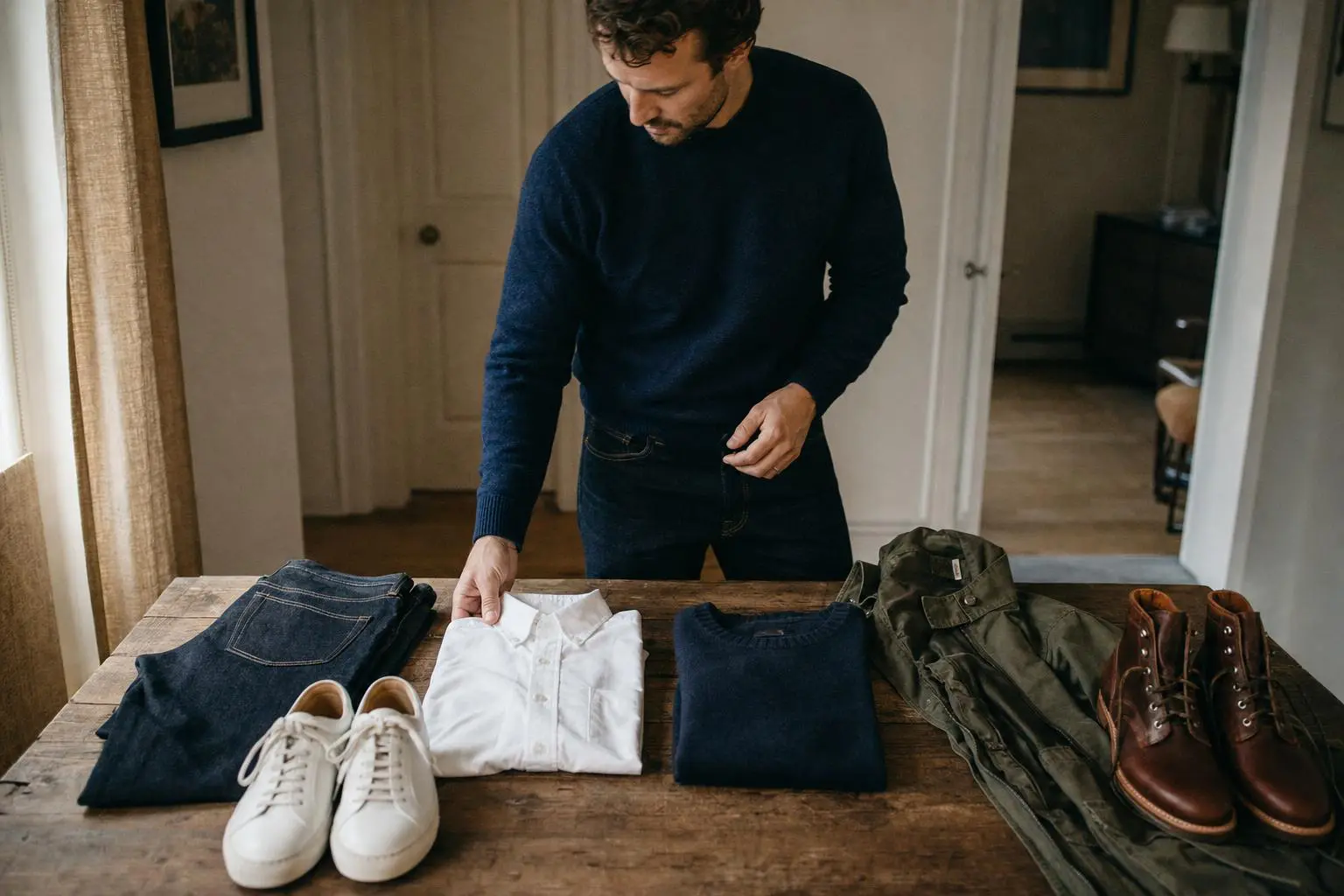
A default is a simple set of clothes that looks good on almost every man in almost every casual setting. Here's the one I'd hand you:
- Dark or mid-wash straight-leg jeans
- An oxford cloth button-down in white or light blue
- A crewneck sweater in navy, gray or olive
- A simple jacket, like a field jacket, chore coat or unstructured blazer
- Clean white leather sneakers or brown leather boots
That's it. Wear those pieces for a month and mix them up. On day one you'll be better dressed than most men at the grocery store.
Here's the thing. Style shows up after the foundation, not before. You'll notice you keep grabbing the olive sweater instead of the gray one. You'll realize boots feel more like you than sneakers do. That's your style talking. You just can't hear it until you're wearing decent clothes on a regular basis.
“Can you just tell me what to buy? I don't want a lecture.”
Fair. But you're getting an order of operations, because the order matters more than the shopping list. Guys who skip ahead end up with a drawer full of “interesting” pieces that don't go with anything.
First, fit. A $30 shirt that fits beats a $200 shirt that doesn't. Every time. (More on how to check this in the next question.)
Next, a tight color palette. Stick to navy, gray, olive, brown, white and light blue for now. Everything in that list goes with everything else, so you can get dressed in the dark and still look put together.
Then, three or four repeatable outfits. If you can't picture what a new shirt goes with, don't buy it.
Finally, personality. Accessories, texture, a signature piece. I'll get to it at the end.
Now, money. Spend it on shoes, outerwear and tailoring. Those take a beating, people notice them, and good ones last for years. Save on T-shirts, socks and basics, because you'll replace those anyway.
A few places to start:
- An affordable oxford shirt that fits.
- Straight-leg or slim jeans in a dark wash. Try both on and buy the pair that fits your legs, not the one your buddy wears.
- A pair of good leather boots.
- A Barbour waxed jacket. It's the icon of the field jacket. There are plenty of knock-offs and a real one isn't cheap, but it keeps you looking sharp in bad weather. If it's out of budget, find a plain waxed cotton jacket in olive or navy and move on.
“Everything I own fits fine. How would I even know if it doesn't?”
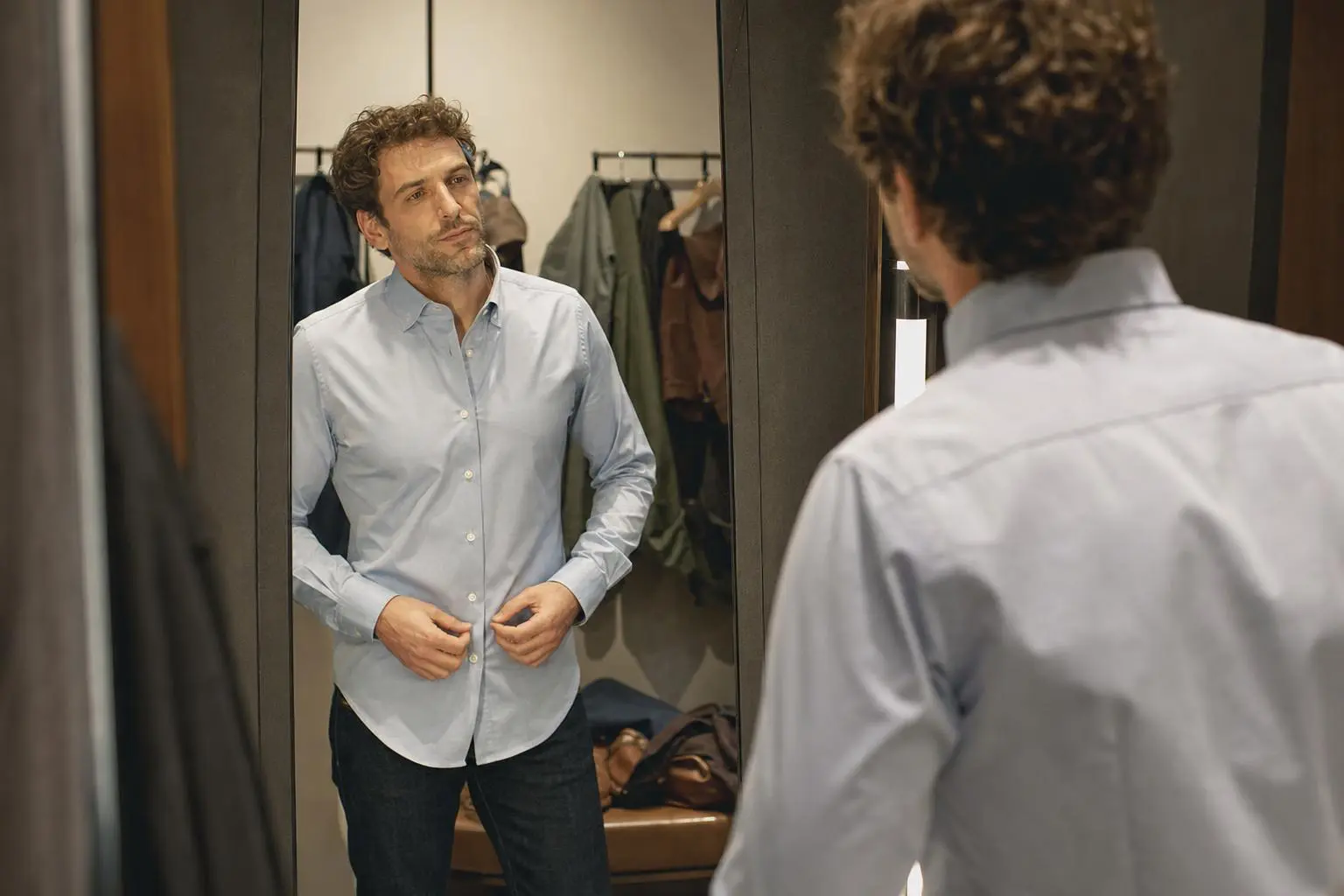
“Fine” is the problem, my friend. Most guys have worn baggy clothes so long that baggy feels normal. So stop going by feel and run these tests in front of a mirror:
- Shoulders: The shirt or jacket seam sits right on the edge of your shoulder bone, not halfway down your arm.
- Sleeves: Shirt cuffs end at your wrist bone. Jacket sleeves show a quarter to half inch of shirt cuff.
- Shirt length: An untucked shirt covers your belt but stops well above your crotch.
- Shirt body: No sail of extra fabric billowing out when you tuck it in.
- Trousers: One slight break at the shoe at most. No puddles of fabric around your ankles.
If something fails two of those tests, it goes. If it fails one, take it to a tailor. Start with two or three pieces, like your best pants and your favorite jacket. A tailor isn't a luxury. He's the cheapest upgrade in menswear.
And if your problem is a shirt that won't stay tucked, I've got a trick. I learned to use shirt stays in the Marine Corps. They're elastic straps that clip to your shirttail and run down to your socks. To this day they're my favorite way to keep a tuck sharp from morning to night. The bonus is they hold your socks up too.

“I'm dropping 20 pounds by summer, so I'm holding off on new clothes until then.”
I'll be blunt. Dress for the body you have now.
Look, I respect the goal. Get after it. But betting your wardrobe on a diet plan is kidding yourself. Counting on ten pounds gone next month usually means another year of wearing clothes that are too tight or too tired. Meanwhile you're showing up to work, to church, and to dinner with your wife looking worse than you need to.
One reader emailed me about a closet split in half. One side held clothes for the body he used to have, the other held clothes for the body he was planning to have. Nothing fit the man standing there. That's the trap.
So buy a small set of basics that fit today. Lose the weight. Then adjust. A tailor can take in a waist, and replacing a few shirts beats living in clothes that don't fit for two years.
“I wear jeans, a polo and my running shoes basically everywhere. Is that really so bad?”
Depends on the jeans. Depends on the polo. And yes, it depends on the shoes.
Here's the outfit I see in every airport, every hardware store, every kid's soccer game. A loose-fitting polo or button-down. Baggy, beat-up jeans that make you look shorter than you are. Old New Balance sneakers that scream DAAAD. And maybe hair gelled up like it's still 2004.
Guys, stop wearing this. It screams mediocrity, and you'll never stand out in it. It doesn't make you look bad, exactly. It makes you invisible.
Now, the fix isn't to throw it all out. Upgrade one piece at a time. Swap the baggy jeans for a dark pair that fits. Trade the running shoes for white leather sneakers. Get a polo that actually hugs your shoulders.

What I don't want you to do is go halfway in the other direction. The worst thing I see isn't the dad uniform. It's the guy who tries to dress up by grabbing random “nice” pieces. A formal white dress shirt worn with casual light-colored jeans and black square-toed shoes. Guys, that isn't an outfit. It's an abomination. Keep your formality levels matched, top to bottom, and you'll never land there.
“Is it cheating to just copy what other guys wear?”
Not even a little. Copying is how every well-dressed man you know got started.
Here's why most guys have “no style.” It isn't a lack of talent. It's a lack of reference points. You've never really looked at what other men wear, so you've got nothing to steer by.
So go get some. Pick two or three men whose clothes you like. Pick guys with a build and a lifestyle close to yours, though, because a six-foot-four actor in a Milan street photo won't help a five-foot-eight accountant in Ohio. Then save twenty or thirty photos of outfits you like. Put them in a folder on your phone.
Now look at them all together and ask what they have in common. Maybe they're all earth tones. Maybe every guy is wearing boots. Maybe the jackets are all a little rugged. That common thread is the first real clue to your style. (And don't be shocked if the folder disagrees with what you thought you liked.)
Copy literally at first, down to the shoes. You'll start changing things on your own soon enough.

“I'm an electrician. Does any of this even apply to me?”
Absolutely. But I'm glad you asked, because most style advice quietly assumes every man works in an office.
A style that ignores your actual days won't get worn. Period. So before you buy anything, map out a normal week. How many days are you on a job site, at a desk, on video calls, at your kid's games, out to dinner? Then dress for those days in that ratio.
The tradesman. Your work clothes are your work clothes, but they can still fit. Look for work pants cut a little closer, fitted henleys, a good chore coat and quality boots. After work, the default outfit from the top of this post is your home base.
The remote worker. Here's the trap: the camera only sees your top half, so the bottom half goes to sweatpants. Before long the top half does too. Dress like you're headed to a coffee shop. Chinos or dark jeans, a knit polo or oxford, real shoes. You'll work differently, and you'll feel differently.
The office guy. Chinos, gray wool trousers, oxford shirts, a navy blazer, brown leather shoes. Add a suit if your work calls for one.
Dress one notch sharper than the people around you wherever you live. That's dressing right for where you actually are.
“Once I've got the basics down, how do I keep from looking boring?”

Now we get to the fun part. Notice this question came last, because it should.
Personality comes from small things. Texture, like a shawl-collar cardigan, a flannel or a suede jacket. One signature piece you wear often enough that people link it to you, like a certain watch, a field jacket or a type of boot. Maybe a fragrance.
But restraint is everything. Early in my own fragrance journey, I was at Lenox Mall with Aaron Marino. I sprayed Tom Ford Tobacco Vanille on about five times. Why? Because it was free. It was just a sample! We got in the car, and Aaron pulled over and made me get out and wash some of it off. Lesson learned. One good spray beats five.
Here's how I think about it. A guy with no style dresses to say nothing. A guy who overdoes it dresses to say “look at me!” What you want is clothing that says “I know you're looking at me.” That's confidence of assumption. You're not begging for attention. You simply expect to be taken seriously.
And to be clear, clothes won't turn you into a better man. Looking sharp doesn't make you a leader, but it sets the stage. Real confidence doesn't come from staying in your comfort zone. It comes when how you feel on the inside matches how the world sees you.
That's the mailbag for this round. If your question didn't make it, it's probably in the pile for next time. And if you didn't send one, now's your chance.
Hit reply on any of my emails, or post it in one of our free communities. Be specific. Tell me your job, your build, your budget, and what you're wearing right now that you hate. The more real your question, the better my answer.
And remember, “I don't have a style” isn't a life sentence. Every man who dresses well today started right where you are.
Semper Fi, Antonio