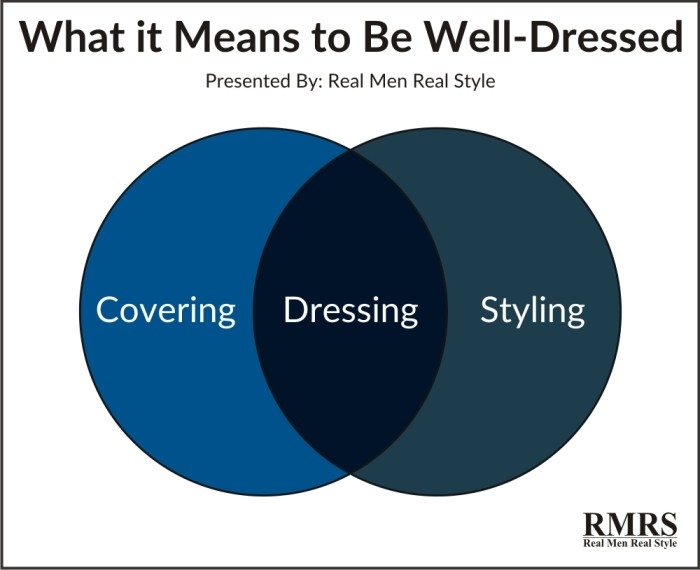
Dressing Vs. Covering
What's the difference?
First of all, let me put the two words into the right context.
The saying “dressing against covering” is inspired by the motto of a retired professional tailor I’ve known for pretty much all my life: my father.
The act of “dressing” translates the Italian “vestirsi” which I find it an elegant sound to describe the art of adorning your personal image. The word “covering” would translate the Italian “coprirsi”, which is a diplomatic way (almost at the brink of politeness) to indicate bad taste, at the least.
Covering is as old as mankind. Even the first specimen of “homo neanderthalensis” had come to the obvious conclusion that tossing some fur on your body could come in handy every now and then.
The act of covering stems from a need, and its scope it’s purely functional. Is it cold out there? Yes? Then, I might wanna throw an extra layer on. Period.
Dressing, of course, also serves a pragmatic purpose, thus includes the act of “covering”, but it doesn’t quite end there. There’s a ton of elements that come into play!
- Look
- Fit
- Comfort
- Patterns
- Stitching
- Matching accessories
- The relationship between an outfit and the particular event you are attending
And the list can go on for quite some lines.
This is a guest post by Mario Natella. Mario's father, Domenico, was an Italian Tailor for many years.

The wisdom he passed down to his son is being depicted through Mario's writing in this article, and several more to come. I hope his passion and enthusiasm for style will speak volumes to you like it did to me.
Click Here To Watch The Video – 3 Old School Style Tips From An Italian Tailor
Click Here To Watch The Video – The Difference Between Dressing Vs. Covering
Dressing Vs. Covering
A similar difference exists if we refer to “eating” as opposed to the functional action of satisfying your hunger.
The latter is rather self-explanatory. “Eating”, on the other hand, is a fine art. It requires harmony and attention to details in the preparation and ingredient selection, as well as a particular ritual to enjoy the particular meal, which makes “eating” an overwhelming experience.
This all sound great, but how do we take action? One may ask. Fair enough.
Introducing The Neapolitan Suit Jacket – The Second Skin
For this purpose, allow me to introduce you to a simple yet fundamental idea. This idea will be your keystone to start dressing, and developing your own style: “la Seconda Pelle” or “the second skin”.
A great outfit has to feel like a second skin once put on. It fits your shape and your body type, allows movement, and it feels extremely comfortable.
Here is a funny story that will help you understand how important this little element is in the development of your personal style.
In the beginning of the 1800s, among the myriads of ateliers in the city of Napoli (South Italy, not far from where my family lives) the suit “alla Napoletana” found its way into men’s fashion. The suit is commonly believed to have been first designed by Vincenzo Attolini, albeit there were many other influential ateliers that contributed to the design of the “abito alla Napoletana” as we know it.
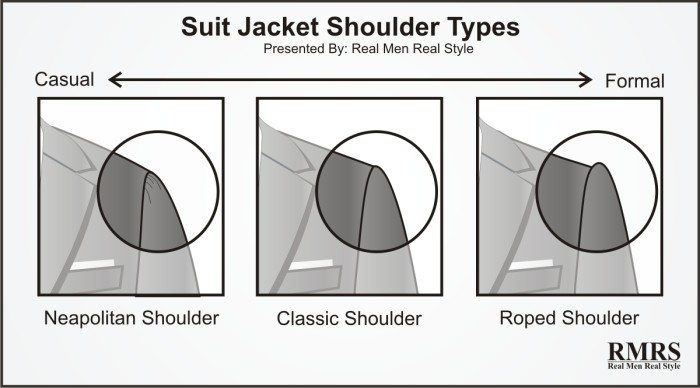
This is a unique suit, which also differs from the classic Italian cut. The suit is meant to be extremely light, comfortable with no canvas inside. The Neapolitan tailors got rid of the shoulder pads, thus allowing the smooth fabric to follow one’s shoulders.
The jacket is single breasted, with three-rolled-two buttons. Between the shoulder and the sleeve, they created small folds (“mappina”) to enhance movement and comfort. The cuffs also feature the same type of stitching.
These are just some of the unique characteristics of that particular suit. But these features were originally meant to accompany the loud gestures of the average Neapolitan customer.
It is common knowledge after all that my folk loves accompanying their words with gestures, more or less vividly. On average, when conversing with an Italian, a safety distance of at least your arm span is strongly advised. The tailors in Napoli knew this very well and created a second skin that would make the particular customer feel comfortable even in the most animated discussion.
But let’s go back to the idea of the second skin.
Money Is Not The Key To Dressing Sharp?
Now we know that when we are about to buy a new item for our wardrobe, we should look for that particular piece that fits us like a second skin.
At this point, most people make the common mistake of thinking that the particular fit requires an absurd amount of money.
Why would I dry my pockets for one piece of clothing when I could get so much more out of my money? Well, that is just plain wrong.
Money is NOT the key in order for you to dress and not cover. Does it help? One may wonder. It surely does, which makes it a sufficient condition. But it is not necessary.
And these two logic statements should help to clarify this idea:
1) If you have money, it will help you dress well.
2) If you dress well, it is not necessarily because you have money.
And it is not even a matter of good or bad brands. Unfortunately, brands need to make a more or less educated guess about the size of the average man in order to produce in large quantities and supply their products worldwide.
But the more or less educated guess may not work for your particular type of body or shoulder, or shoulder to waist ratio.
For example, I definitely fall into the category of average sized man, but my shoulder to waist ratio gives me a coffee filter shape which makes shopping a lot harder for me. And this happens regardless of the particular brand.
So if money is not the key, and brand does not necessarily make a difference, what is it that counts?
The tailor? Well, there’s good and bad tailors out there, so you need to be really careful about that. You need to get to know him/her, before feeling comfortable about leaving your favorite jacket in his/her hands.
What really makes the difference is you, my friend. Yes, you.
You, who are reading these very lines. You need to know yourself, your body, your flaws and you are the one who should use the money, brand, and tailors to give yourself the best feeling and the best comfort ever.
How To Apply Dressing To Your Life – It's About The Man
Let me give you a real-life example:
A while ago, I wanted to add a new piece to my wardrobe: a silk shirt.
I had read good comments and articles about some of the shirts, checked a few in the stores but the price was a “little” over my budget. (Let’s just say that I’m being diplomatic because it definitely wasn’t a little!). But here’s the funny thing, that doesn’t matter at all!
I checked a thrift shop and found a second-hand silk shirt that was almost good. It was a little too large over my waist, the sleeves needed to be shortened. On the good side, the shoulders fit just right, and the overall look was great!
This is because when I was looking at the mirror I was already picturing that shirt with all the tweaks that would make it perfect. Believe it or not, I paid €3 for that shirt (which is a little over $3).

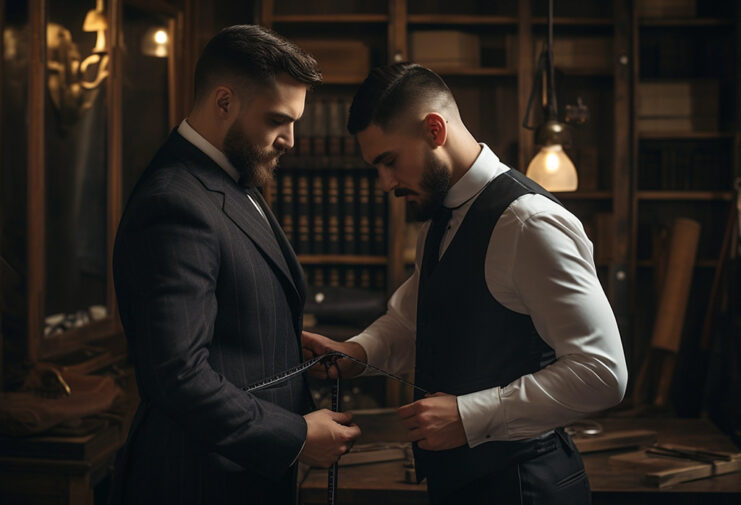
I gave it to my father for the final touches and voilà I had a custom silk shirt almost for free.
Some of you can argue: well, what if I don’t have a tailor as a father? No problem. It turns out, according to my father, that for those modifications you would end up paying around €15-20 (which is about $17-22). That means you have a custom silk shirt for €18-23 ($20-25), that is still nothing compared to the price you can find in a store.
This little personal experience shows you how to take action and look for that particular item that fits you like a second skin.



In Summary
The key to it is you!
You need to train your eye for good clothes, understand how they fit you, or how they can be tweaked in order to fall on your body like a second skin. You need to understand how to achieve comfort, enhance movement and look great.
Money, brands, tailors, and clothiers are just means to achieve that. But not musts. With this knowledge, we can develop an extremely personal style, following our instinct and taste, regardless of the fleeting trends.
This is a guest post by Mario Natella. Mario's father, Domenico, was an Italian Tailor for many years.
The wisdom he passed down to his son is being depicted through Mario's writing in this article, and several more to come. I hope his passion and enthusiasm for style will speak volumes to you like it did to me.