7 Ways to Be A Better Negotiator | How to Negotiate | Negotiating Skills Tips Tricks Video
This post is based on the video – 7 Ways to Be A Better Negotiator – Negotiation – How to Negotiate – Negotiating Skills Tips Tricks
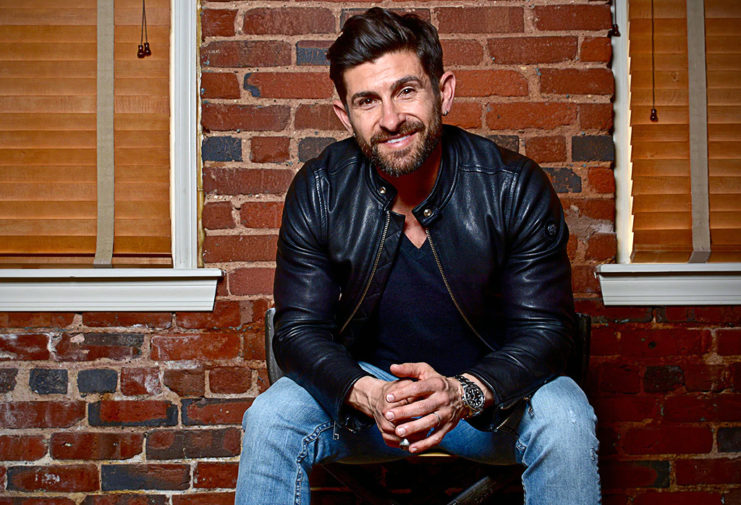
Hi! I'm Antonio Centeno. I'm the founder of Real Men Real Style.
Welcome to my YouTube channel and today, I'm going to be talking about seven ways that you can become a better negotiator.
Why does this matter?
Well, let's just say that by following these techniques and starting to implement these in your life, you're going to save money.
You're going to save time
You're going to really save a lot of your scarce resources when you're out there and you're not afraid to start using this stuff. It's something that there are a lot of myths out there, a lot of misconceptions, and I'm going to try to give you some timeless, proven techniques so that you can become a better negotiator.
Now, before we get into this, I'm going to ask you guys to please subscribe to the YouTube channel. By doing this, these videos come right to you. In addition, you don’t miss any of my ghost videos. What are ghost videos? These are videos I put out for about 24, sometimes about 48 hours, but then I pull them. I make them unlisted.
Unless you got an email from YouTube saying, “Hey, Antonio put up a new video,” you're not going to have that link. You may come to my channel and you're just not going to see them. Unfortunately, you're going to miss that great content.
Now, if you like this video, if you've got something to add, make sure to click on the “like” button or go down into the comments and give me some feedback. Let me know how I can make this better. Okay. Let's go ahead and dive into this.
The number one thing you need to understand about negotiations is that most people aren't very good at it. Why does this matter? Because if you understand that, you realize that by making a small investment in upping your negotiation skills, you're going to be able to get a lot of mileage out of that.
I talk about this a lot in men's style and probably many of you guys have been following my channel for a while and you've noticed this.
You start to up your game just a bit and all of a sudden, you're setting yourself apart, the same thing with negotiations. By starting to apply proven tactics — and the stuff I'm going to mention, the other tips, a lot of this comes out of research that's been done by people at really smart schools, University of Texas, Harvard, Stanford, all of these schools where they have gone. People with 20-pound brains have done all this research and this stuff works. So simply by reading a book on the subject, you're going to elevate yourself by taking a course.
Now, I've got a course within my style system here at Real Men Real Style that I offer, but I would recommend if you don’t want to take my course, go take one at your local junior college. At least read a book, but it's not just about the information, guys. You have to practice doing this. Again, understand that most people are pretty bad and most people actually think that they're a decent negotiator. When it comes down to it, they may be about average because they're just not applying the right techniques.
The number two thing that you need to pay attention to is understanding yourself. Now, I know this seems pretty general, so I'm going to get a little bit more specific, but first off, you need to know what your BATANA is. BATANA stands for “Best Alternative To A Negotiated Agreement”, again, one of those terms that came out of one of those really big books out of Harvard. Basically, the BATANA is where you're not going to go anywhere less than.
Any of you guys out there who own a company, if you've ever agreed to something, you take a step back and maybe the next day or even later that day, you're like, “Man, why did I agree to that?” You know what I'm talking about.
You've felt that because you didn’t have a set BATNA when you went into the negotiation. We negotiate all the time. Every time you go into a store and you make a purchase, there's a bit of a negotiation there. It seems like it's one way, but there are a lot of stores that you can actually bargain with.
Now, in the United States, a little bit harder, but if anyone has traveled abroad, you'll see that bartering and going back and forth, and a little bit of negotiation happens a lot. When you can go to a vendor at the end of the day, he's got fruit that he needs to get rid of. This is going to go bad. He's going to throw it out and you can make an offer.
But when you know your BATNA, that you know — let's just, I guess, use the fruit example. You know the fruit has to be at this level because if you were to pay for it and if it was at a lower quality level than you're willing to accept, you're not going to like the agreement. You're going to have a certain amount that you're willing to pay and if you go beyond that, then you know that you're going to not be happy because you've got to be careful in a negotiation.
This again is part two of knowing yourself, is be careful of focal points. These are emotional things that — we're emotional beings, so oftentimes, there are certain things that we focus in on in a negotiation and we get laser-focused and we forget about all the other things around the negotiation.
This often happens when someone is going in to negotiate for their salary. If anyone's worked for a company, you realize there's a lot more than working for a company than the money. There's also how many hours are you going to be expected and required to work, how much leave time, how much sick time. Can you work on Fridays or maybe Mondays from home?
How much travel are you going to need to do? Are you going to get these in your contract? There are all these other things, but oftentimes when we're negotiating our salary and whenever you're getting hired, that's actually you're in your best point to negotiate. We're just looking at the number.
We're not necessarily going to look into all these other things. If you're a family person, you might realize that honestly, I am fine with the salary, but I would rather go with these other things.
A great example is when I bought my house here in Wisconsin. I spoke with the woman. She was a distressed seller. I knew she had already gone down on price, and most people were focusing on the price trying to push her down. This leads to point three, knowing others. I went ahead and I looked at her wants. I looked at her needs. I looked at her alternatives.
All of a sudden, I realized that she had been pushed on price. Let's go ahead and see — I wanted the piano. She had a beautiful piano in the house and I didn’t want her to take it. My wife plays piano. My wife and my son were moving over from Ukraine. We didn’t have a piano and I knew buying a piano would cost me at least $1000 for a piano like this, at least a few thousand dollars. I'm like, “Well, if you can throw this in along with some other furniture pieces, I'm perfectly fine. Throw in all of these appliances.”
You know what? It turned out that was a perfect deal because when I spoke with her, when I built up trust — and again, I'm hitting on a number of points here, so hopefully you're taking notes — but when I did that, I found out that she just met her college boyfriend. She's just been out of a divorce, so now she's back with a college boyfriend.
This was an older woman that — she was in love again and she just wanted to move to Milwaukee and really start her life over. She didn’t want to take any of this stuff, so I actually sweetened the deal. I didn’t negotiate on price because I knew she had already dropped quite a bit, and instead, I got basically a fully furnished house, and that worked out really well, so knowing yourself, knowing others.
We've talked about point one, point two, point three. Let's go ahead and go to point four, and that's understanding the situation. Many negotiations are — it's not just a one-shot deal. Many of them are repetitive or it's a long-term negotiation.
When I was getting this new studio space, when I was getting my office, I remember seeing what the price was for the space and it was something that I spoke with the owner over the period of about a year and I watched his price go down a bit. Now, here's the deal. I didn’t want to lowball him and try to get just the lowest price because you know what? I've got a deal with him every single month. I send him a check.
He also has the ability in two years to substantially increase my price. Now, I have the ability to leave as well, but I look at this as this is a guy that if I go too low, he's not going to maybe answer my phone calls if I've got something going wrong, so you've got to think about the situation, so that's number four.
There are a few other things in a situation which probably goes beyond this video. Scarcity, ideology, those are things. If you look at what's going on in the Middle East, there's a reason why they have had conflict for as long as — gosh, over what, a couple thousand years? It's simply ideology, the inability for people to agree on some very basic fundamentals.
Scarcity, let's look at California, Arizona, and Nevada. Well, they're going to have a water issue here very soon because there's only so much water. Right now, California has taken more than its fair share. That negotiation agreement I think is already up or it's going to be. There's going to be a huge thing there because there's a scarcity of water.
In addition, you want to look at is this a negotiation of necessity or opportunity. Now, if anyone is a Star Trek fan, do you remember the part where the Klingons actually had to negotiate with the federation because — what was it — something exploded. I don’t remember which Star Trek it was, but they've got to negotiate because basically, it's out of necessity, versus the negotiation of opportunity is one that probably both parties could walk away from a little bit easier. Is agreement required? Whenever you're getting a divorce, an agreement is required versus other ones in which an agreement isn't required.
Let's go to number five, which is make — and I'm going to give you some very specific things that you can do in a negotiation to make sure that you get the best deal beyond your BATNA. The first one is make the first offer if you are prepared. If you're not prepared, there's another type of thought that says go ahead and let them make the first offer, and actually see if it goes well beyond your BATNA, and then try to raise it up.
But if you're prepared, if you know a whole lot about them and you know yourself, you understand the situation, then you can go ahead and put in a very pinpointed offer, and the power of doing this is you set an anchor.
Now, I do this actually quite a bit with my business on pricing or other things like that. Whenever I'm putting out products, whenever I'm putting out things, if you actually go back and look at the way I put things out there, a good example would be a car lot. If you go on to a car lot and there's a Ferrari, first car you see, really, really nice, $200,000, we're looking at that car. Then you see, let's say, a Ford next to it. The Ford is only like $15,000 to $20,000. It's a mid-size, decent vehicle, but compared with a Ferrari — because the anchor, that price set, this seems inexpensive. This seems cheap.
So whenever you can make, in a sense — and that's what the dealership is doing, is they're putting out something to set the price high. That's why dealerships often have some of their highest priced items right out there and the lower cost things in the back, the same with stores. They're setting your expectation of what the store is. And whenever you can make your first offer, again, you are prepared. You know yourself. You know the other person. You know the situation. Then all of a sudden, you can set the anchor and you can set the tone for the negotiation.
Now, let's say something happens in your negotiation and they make the first offer and it's really low? Well, immediately what you want to do is re-anchor the entire situation and this is where you want to come back very quickly. You want to go to the point.
The idea is if they come over here at the low point, you come over here at a much higher point with the goal that okay, we're going to at some point get here in the middle because my BATNA is over in here. So you've kind of lost a little bit of the edge, but there are people that are going to be able to get that back if you re-anchor correctly and set it all back to zero.
We're also going to talk about the power of fairness. Now, this one's very interesting because they've done these tests in which they show people — they give people a dollar. They said, “Okay, you guys need to divide it up. One person is going to divide it. However, the other person can veto the whole deal and say, ‘Well, no deal and we're not going to get anything.'”
What they find is that a lot of people, they simply go 50-50 because it's fair. It seems like that's the right thing to do, but what happens when someone starts going 60-40, 70-30, and literally — because they're the one dividing and they get to take the first share, and then they're going to leave that 30 cents or that 20 cents for the other person. Well, shouldn't that other person just accept it? I mean, it's better than getting zero, but logic doesn’t apply here because they violate the rule of fairness.
The farther they do violate that rule, most people are going to say, “That is not fair. You're completely ripping me off and I'm going to go with zero,” and they do it. Come on. Let's think about it. It makes no sense. Even if it's a penny, you're actually a penny richer, but what has been violated is the perception of fairness.
So when you're in there — and this is so important — that you know the other person because if you violate their perception of fairness, you can really — all of a sudden, a logic goes out the window and all of a sudden, you're dealing with someone that maybe is looking at this out of an emotional — and that's the focal point. They're like, “This person, obviously I can't trust them and they're trying to take advantage of me. I'd rather, despite both of us, make the negotiation fail,” so make sure to pay attention to fairness.
Number seven, this one is perhaps my favorite, is expand the pie. I sort of talked about it a little bit earlier, but oftentimes in negotiation, we focus in on one thing versus actually creating trust, sharing information, looking are there multiple issues and are there multiple parties that could be involved?
Whenever you do this, all of a sudden, you can take the pie that's being split and you can expand it. Most people, when they're negotiating, one of the miss out there is that the pie is limited, that there are scarce resources. Now, occasionally there are scarce resources, but a lot of times, there are a number of issues in play. You can bring in a number of players and you can in a sense make the whole thing bigger and you can create what are called win-win situations. That's ideally where you want to go.
Now, a great example is look in the basketball world. Here in the United States, we see these multi-team trades where you've got three teams, sometimes even four teams, and players are just going all over the place. Money is moving. Contracts are moving. At the end of the day, everyone is happy. Everyone agreed to this. No one put a gun to anyone's head, at least that I know of, and made these trades happen. And so, because they involved multiple parties, they all of a sudden expanded the pie. They were able to do things that two people perhaps weren't.
Another way of expanding the pie is, again, talking. I use the example of me buying my house. That was expanding the pie. I listened and I understood what are the other issues. Whenever you're negotiating a salary or you're talking with a company, perhaps the company — if you're pushing that you just don’t want to travel, but the whole reason they're hiring you is they need you to travel, they're willing to double your salary because to be honest, they're incredibly profitable.
They want you, but they want you to travel, so you're going to have to find — okay, I'm a single guy. I'll go ahead and take that extra bit of money. I'm not going to see my girlfriend as much, but this will enable us to save up for a house. Again, look how you can expand the pie.
Let's go ahead and summarize really quick, guys. One, most people are ineffective when they negotiate. Number two, know yourself. Number three, know the other party. Know who you're negotiating with. Number four, understand the situation. Number five, make the first offer. Number six, understand the power of fairness. Number seven, expand the pie.
Okay, guys, hopefully you found this useful. I'm expanding over here at Real Men Real Style and I really do appreciate your support, but I know a lot of you guys want more information about men's style and other skills and things that men should know, so make sure to go download our free 47-page e-book. Just go to www.realmenrealstyle.com. I've got that e-book. It's there for joining my email list where every week, I'm going to email you a couple of times. Usually, I send you off to — I just give you some great tips.
That's it, guys. I will see you in the next video. Take care. Bye-bye.
I'm Antonio Centeno, the founder of RMRS. I'm a former Marine Corps Officer with a BA in Evolutionary Biology and Philosophy (Cornell College 98') and an MBA from The University Of Texas at Austin (07'). I studied the Science of Style in London, Hong Kong, and Bangkok and have created over 5000 videos/ articles to help men dress better. Click here to discover more about me and our mission here at RMRS.
Ready to earn more money and command respect with the right clothing? Want to start dressing sharp today? Click here to discover The Style System , the BEST Professional Style Course on the planet!