Shirt fabrics, or “shirtings” as they are called by tailors, come in a wide variety of weaves.
Cotton is the most common fabric for dress shirts.
Most fabric names refer to a particular method of weaving it.
We won't go into it here.
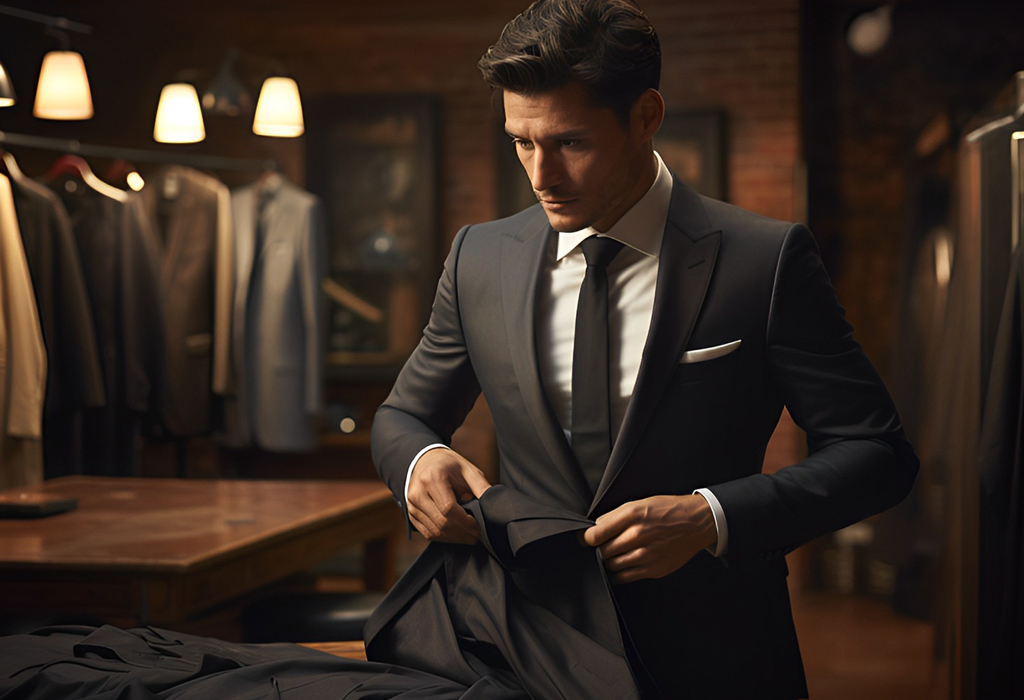
But be aware that the thickness of the fabric and the quality of the cotton also come into play when determining the quality and function of the total product.
The following are the most common fabrics used in dress shirts.
Discover why it is important to learn and identify each fabric and its properties.
Oxford Fabric
Oxford cloth, the coarsest shirting, is nonetheless quite soft and comfortable. A more casual fabric, its most natural form is the button-down collar.
In colored and patterned Oxford shirts, only the threads running in one direction are dyed, while the others are left white.
This gives the basketweave fabric ( a fabric whose warp and weft threads cross each other in pairs) its characteristic textured appearance.
Pinpoint Oxford is woven likewise, but of finer yarn, and is thus smoother and more formal. Royal Oxford is finer still, and can stand proudly beside a fine wool suit and expensive tie.
Poplin Fabric
Poplin bears a smoother texture but similar weight, the result of a fine yarn running one way with a thicker one interweaving it.

It is soft, comfortable and often used in more casual shirts. Colors find themselves easily at home here, and it takes sporty patterns especially well.
Twill Fabric
Cotton twill, a shimmery diagonal weave, makes for richly textured shirts without sacrificing formality.
In herringbone twill, the direction of the diagonals switches back and forth every quarter inch or so, giving the fabric even more depth.
When occasion or whim calls for a solid shirt, twill plays the role with panache by creating great texture.
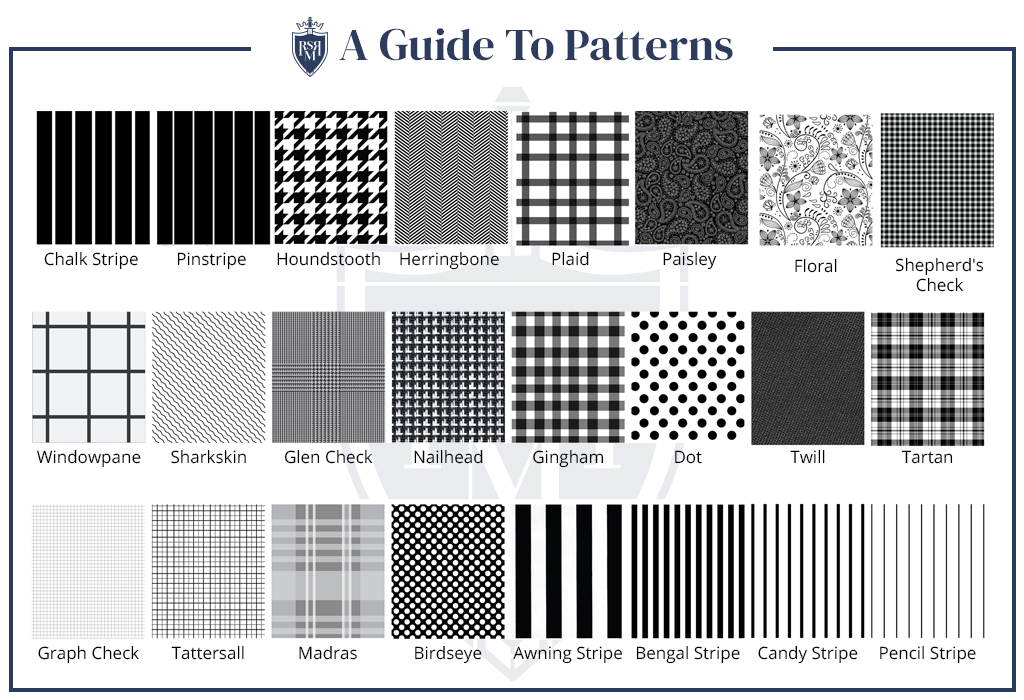
Interested to learn more about fabrics? Check out this infographic – Guide to Suit and Shirt Patterns
Broadcloth Fabric
Broadcloth, a fabric whose weave is very similar to poplin except more densely packed, is one of the most formal shirting for day-to-day wear.
End-on-end broadcloth is that made by interweaving threads of alternating colors for a visual texture so subtle it appears solid from an arm's length away.
Thanks to its tight weave, this cloth displays patterns with exquisite precision.
Also read:


End-On-End Fabrics
A plain one-on-one weave, this fabric traditionally uses white with another color to create a subtle check effect. Occasionally, two colors are used to create a “double shot” of color.
It is often incorporated into a stripe pattern, as see here (the end on end being the dark blue).
Want to learn more about custom shirt fabrics? Check out this article about dress shirt fabric weaves.
Formal Shirt Fabrics
Formal shirts are made of white cotton, which boasts a rich, woven texture. This is the only shirt proper for black tie or white tie, and it is not appropriate for anything else.
Cotton vs Blends
Besides pure cotton, all the fabrics above can be found in cotton/polyester blends. We'll layout the pros and cons of each.
Please keep in mind that with blends, you have a wide range of percent combinations and sometimes more than two fiber types are blended. The below information is “in general”.
100% Cotton Shirt Fabrics
Pros – Breathable, good conductor of heat, very attractive appearance, natural, the standard by which other shirt fabrics are judged.
Cons – Wrinkles easily, can be expensive, loses heat quickly, susceptible to mildew and acid/bleach damage.
Blended Shirt Fabrics
Pros – Wrinkle resistant, less expensive, can have a very nice appearance, warmer than a 100% cotton shirt
Cons – Too much man-made fiber can make the fabric not very breathable, thus uncomfortable to wear on a hot day. Can appear shiny, and more susceptible to heat damage from an iron.
Interested to learn more about fabrics? Check out this infographic – Guide to Suit and Shirt Patterns