This post is an interview transcript. Click here to listen to OZEAL’s interview with Antonio Centeno
Ep 40 Style and Business
[0:00:00]
Male: No Permission Needed, upfront with creative professionals, influencers, and the coolest of the cool inspiring you to get up, get out, and do something.
Male: So what do you think we should do?
Antonio: Pick yourself.
Female: And now, your host of No Permission Needed, Ozeal.
Ozeal: Hello, ladies and gents! Welcome back to another episode of No Permission Needed and today, guess what? We are celebrating the big 40th Episode. That's right, so I want to thank you all very much for your downloads, your love and your support. It's been amazing. Seriously, y'all, I've been having so much fun podcasting and just having the opportunity to chat with some of the most amazing individuals. I hope you're digging the show so far and getting tons of value from it.
I recently found out that one of our listeners launched her first blogging website after connecting with one of the guests I had on the show. They connected, some advice was given, some action was taken and bam, a successful story from No Permission Needed, so there's nothing more rewarding than that. Definitely the fact that you listen and the fact that you're connected and making it happen and just reaching out and starting your own projects, that's super exciting, super inspiring, so thank you so much for that. If you're new to the show, please go back and check out all the other episodes. I think you'll dig them for sure. We have 39 in the bag, so there's a lot of great content in there.
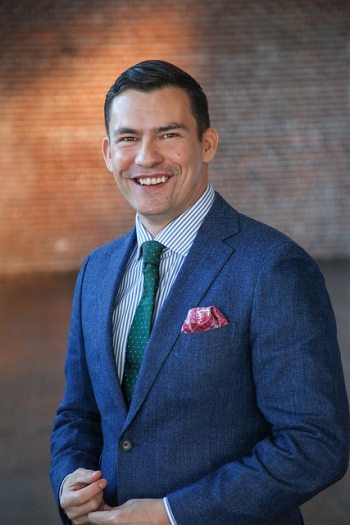
Let's get to today's episode, shall we? Because I've been anticipating this interview for quite some time. Today's guest is the epitome of a true gentleman. He's a family man, entrepreneur, content creator, and a former officer of Marines, and — that's right, there's an “and” — he's one of the most stylish men in the online world, founder of realmenrealstyle.com — I love the name — which is a full-on media platform with lots of valuable content, teaching men everything from fashion tips to grooming to all the essential ingredients in becoming a better man.
Ladies and gents, let's give a big welcome to my man, Antonio Centeno, to the show. Welcome to the show, my friend.
Antonio: Ozeal, thanks for having me, great to be here.
Ozeal: Before we get started, a little birdie told me that — because I'm in Houston — that you are also from — well, you lived in Texas for quite some time, right? You have some roots down here in Texas.
Antonio: That's true. I grew up in Midland, Texas. I went to the University of Texas in Austin to get my MBA. I've lived in Corpus Christi and I've pretty much been all around the states. I miss the Lone Star State. Now, I live up in Wisconsin. I don’t know if I'll ever be able to move back. I think in the last 15 to 20 years, we've seen like 10 million people move down there and it's become a little bit crowded, but my heart is always going to be in Texas.
Ozeal: Sure, but you don’t have Tex-Mex food that we do down here in Texas, right? I know you miss our Tex-Mex food, right?
Antonio: I do and I have to try to make it myself up here a little bit, but yeah, their idea of spicy food up here is not — they just don’t get it, but I do have to admit, Wisconsin is pretty nice. They are the land of cheese, sausage, and beer.
Ozeal: Yeah. I believe I've met a couple of gentlemen at the airport a few weeks back and they were talking about Madison, Wisconsin and they were talking how it's a happening town, great city, and they were just raving about it . “You've got to come out. It's amazing,” and I saw some pictures and I was like, you know what, this seems like a really, really cool city. I definitely got to check it out. It's kind of underrated. I don’t think anybody talks about Wisconsin, but you guys have a lot to give.
Antonio: Yeah. You know, I think it's the winters. A six-month long winter scares people especially when it gets so cold. I remember one of the first winters up here. It got so cold that the oil in my truck froze. It was like negative 45 degrees outside. So at that temperature, you just don’t go outside. You don’t even try to start your vehicle.
Ozeal: Yeah. Trust me, I'm originally from Chicago, so I know all about those winters, cold winters, so I could definitely relate. I want to talk to you about your entrepreneurial beginnings and how did you connect the dots between business and men's fashion. Let's start there.
Antonio: Sure. You know, there are a lot of people that they started selling at lemonade stands or they were selling candy at school. I don’t have any stories like that. I grew up where everyone in my family had a job, a job that they pretty much didn’t like, that they hated. They looked forward to the weekends and that was the type of mentality I was around.
I was in the Marine Corps. I spent five years as an officer in the Marines, got out at the end of the Iraq war. I went over to Ukraine, lived there for a while, and I think that was probably just trying to make things happen.
[0:05:00]
I went to business school and I was exposed to a lot of new ideas. You know when you go to a good school that they actually open your mind to new ideas. I didn’t learn much in class, but the best thing I got out of there was I was surrounded by people that have started things.
I met a guy named Rob Adams. He was in charge of the Venture Labs' investment part of the University of Texas and he showed me just all of these — and it was more venture capital, angel investing type of things, but it got me excited. I started reading these stories and I started learning more. That summer, I guess it was entrepreneurial, but I knew I was going to go to Ukraine. I wasn't going to spend my time in the United States because I had to be with my wife and my son, who had already been born, so I had been separated. I'm going to Ukraine no matter what, but there weren't any companies that I could get an internship, so I've made up my own internship. I didn’t really get any money for it, but I did get access. I found that people were more than willing if you volunteer and you have a pedigree of work, that people are very much going to let you open up and come into their business, and that's what I got to do.
I saw some opportunity there and I would say my first taste in entrepreneurship was hanging around with this custom clothier. He came out to my place there in Ukraine, made a suit for me, then I met another online custom clothier whenever I was — actually, these guys weren't online. They just had a basic website, but they would come to you, and this was again when I was a student at the University of Texas finishing up. I needed suits for all my interviews. And just talking with these guys and realizing that what they were doing — they didn’t have any type of training or education. They were just hustlers making it happen and they were making more money than a lot of the people I knew that had these fancy degrees and they were setting their own hours. Now, they didn’t tell me how many hours they were working and I learned very quickly that entrepreneurs can put in a hundred hours a week and you only get paid like it's 40 sometimes, but I definitely learned — that gave me a taste of what was possible and I loved the idea of that freedom.
So in 2007 after getting fired from my first company I had tried working for that didn’t last very long, I decided hey, I might as well start my own company and give it a shot. I was up here in Wisconsin and started my first online custom clothing company, so that was my first venture in 2007 into the entrepreneurial world.
Ozeal: Let's go back a little bit — and first off, I salute you and thank you for your service, sir — in how the military has influenced you in a positive way as far as being a good entrepreneur.
Antonio: You know, there are a lot of things that I could take from it. I think from an outside view, maybe it does look like an authoritative system, but one of the things that the Marine Corps I know teaches young Marines and Marine officers is that at your higher level, that guy could very much be killed at any point. So what are you going to do after your commanding officer or the sergeant above you, basically his head is separated from his body? Of course, you're going to be writing somebody a letter, but at this moment, you've got to make a decision. I think that the ability to think on your feet and seeing people actually do that in truly high stress situations is a great thing that I took from the military.
Another great thing that we took from the military is simply I think really getting exposed to what it means for things to really suck. I say that the Marine Corps kind of prided on actually putting us in I think non-comfortable situations, but a lot of people have this fear that they're going to lose something. They're going to lose what's of great value. They're going to maybe lose some face. They're going to lose money. “How would I go start a business when I've got this job that's paying me $40,000 or $50,000 or even $100,000 a year? I'm just comfortable where I'm at.”
I know what made me real comfortable in the Marine Corps, is simply having a good meal, having a place to be able to lay my head, and when no one's shooting at me, I'm pretty happy, those basic things. And really, it comes down to the best things in life are really those simple ones, are our family, our friends, our relationships, being able to have the basic meals. What's cool about that is it frees you up to realize that all of these illusions of fear of going off and starting your own business really aren't there because yeah, there is a chance that you will lose your car. You will lose your house. You will have to go in and move in with your mom or you will have to ask for favors. You may lose this person or your investor's money, but if that's it, okay, I understand. That's what you could lose.
Go off and give it a shot because at the end of the day — I think Ronald Reagan said that a Marine will never have the problem of knowing that his life made a difference, that he actually did something in life.
[0:10:07]
But I think a lot of people, they don’t have maybe that — I feel that they're going to go to their grave looking back and having that regret of not giving it a shot, of not trying to make their deal, of seeing an idea and then — A Tailored Suit, my first online custom clothier, failed. And as much as it hurts me to say that, I say it with pride because at the same time, there were two other companies that started when I started. One of them is Indochino and the other one is A Suit That Fits, and both of those companies took investor money and they have been kicking butt, killing it, doing great. I didn’t ever get investor money. I decided to try to bootstrap it the entire way, but I can say I remember watching those companies go through those iterations and congratulations to them, their investors, their founders.
I at least threw it out there and I tried to make it a go. I learned a heck of a lot and it was that failure which led to the success now that we have with Real Men Real Style, so everything that has come after that has been because I failed with that business, and from that failure, I took what was working, which is I realized I'm a good content creator and that I can build up an audience and then I was able to leverage that into a thriving business.
Ozeal: Concerning A Tailored Suit, in what ways do you feel you were a failure?
Antonio: I don’t feel I was a failure. I feel the business failed. It simply wasn't able to make a profit that I was happy with. If you're working 80 hours a week for an entire year and you're missing your kids' birthday parties and stuff like that and you're only paying yourself $20,000 a year, you could've taken a job out of business school that would've paid you $200,000 a year within a year out. It's like what in the hell am I working for if I'm paid one-tenth as much as my peers are?
I'm friends with my buddies on Facebook. They went to Wall Street. They're working for Goldman Sachs. They're working for Bain. They're working for McKinsey & Company. And so, I've got smart friends and I know what they're doing. They're taking their vacations, all that fun stuff, and you ask yourself, “Gosh, what did I do here?” But at the same time, I look at that as I've paid my dues. And because of that, I can talk e-commerce. I can talk what it's like to run a clothier. I've made the mistakes that I think every entrepreneur has to make in order to really get to the level where he has no problem being able to run a company that makes a profit. He can make the hard decisions because he realizes it's pretty easy to say “no”.
It's easy for me to say “no” to people and the reason being is I know that if I say “yes” to them, I am giving up time, I'm giving up resources that could be spent with my family. So when I fire somebody, it's not because I don’t like them. It's simply because it's putting my entire business in jeopardy if I'm a charity giving money to someone that is not giving me a return on that investment.
Ozeal: Okay, so those are the insights you gained going through these business failures and the lessons you get.
Antonio: Yeah. You could read about it all day. It's like riding a bike. You can read up about bikes every single day, but until you jump on that bicycle, until you jump on that motorcycle, until you drive that stick shift, it doesn’t matter how many videos you watched. You have to do it.
Ozeal: I truly value what you just said because I believe it's an epidemic in the online world these days where now everybody wants to be — and you and I talked before we started. Everybody wants to be a consultant. Everybody wants to be a coach. And then when you dig deeper into the work they do, you figure out and you discover that they haven't been in the trenches. Now, it's the sexy thing to be a coach and to be a consultant and I think what you are, what you represent, Antonio, is a rarity because you've been in the trenches. You've been in the mix. You failed with the business before. You know exactly what's going on, all the ins and outs, the right person to hire, who not to hire, and that insight is so, so vital in moving forward and seeing the success you've had with Real Men Real Style.
What is your opinion — because you were there in the early days. Now, you see a lot of the online world, especially in the fashion — we're going to talk about this — especially in the fashion world. Now, they're coming out of the left field. There are so many of them now and you were one of the pioneers. I want to get your thought of how this thought leadership and consulting business is going and how that relates to what you're doing now.
[0:15:03]
Antonio: I appreciate being called a pioneer, but what's funny is I started in 2007. In what world do we live in that nine years makes me a pioneer? Because I go back and I feel that there's still so much and everything — it's funny. I take something that I read from Porter. I go in and I read these old books and I'm able to bring — they call it your unique selling position. That was called competitive strategy and before that, there were many names for this.
There are always going to be people better at doing everything. On YouTube, I'm watching one channel, the guys over at Teaching Men's Fashion. I'm glad they're good friends with me. They actually work with us at MENfluential, which is — Aaron Marino and I both — and you can go check out Aaron Marino's channel. That guy is just killing it, but both of us agreed that we will not be the last and we will not be the biggest men's style channels out there.
So we wanted to create a media company which would identify up and coming talent and help take them to the next level with the honest to God goal of helping them take it to the next level but being a part of that and being able to monetize with them, being very transparent, and that's what we're able to do with this other company we've started to call MENfluential and it's great.
Ozeal: I love that name, by the way. It's just a killer name.
Antonio: Yeah. Terry Adelman, he's one of the partners on it, too. I think he came up with that, maybe it was Aaron, one of those. I have to admit that I was like, “Okay, it's a little bit hard to spell, but I'll go with it.” Those guys, I just realized — getting back to your question about what do I think about all these up and comers, I think it's great if they actually put in their dues and if they can bring some value. The great thing about again having put in my dues is I can very quickly tell when someone's trying to blow smoke up my backside.
SEO services, I used to get tons of people reaching out, not as much anymore, but everyone's always trying to sell snake oil, how you can rank for the top page of Google. It's funny. I remember we interviewed — we were looking for an SEO company and because I had spent years SEO optimizing my little website, A Tailored Suit, and I had gotten us at one point I think well over 150,000 visitors a month, which for a little clothier out of Wisconsin was pretty good back in 2008 to 2009, I was proud of that and I knew, but I learned all the basic foundation tactics.
And so, whenever I would have a company come in and wanting to charge me $5000 for something and I would look at it and what they're going to do, I knew the questions to ask because I had already been there. And I found out of the 50 companies, zero met the criteria. I was like, are you kidding me? Nothing!
Ozeal: All fluff, huh?
Antonio: Yeah. I lost $10,000 hiring a website company to build me a website and they failed miserably. I had to go to Barnes & Noble and for two months, I learned how to use Dreamweaver and be able to code a basic site that I was able to get running, and that basic site for five years was what A Tailored Suit ran on because I couldn't afford another website while I'm watching guys like IndoChino get a new website every month because they had venture capital.
But the point is me going through that headache of staying up all night with cups of coffee learning to code — and I'm still a novice, but I can look at the backend of a website very quickly now. I can just right click and look at the source code and I can see things which because I had done that — and again, I'm not saying I'm an expert here, but you're able to speak that language. It's like playing in high school football. When you watch the NFL, of course you're not at that level, but you know the positions and you know the pain points and you know enough to be dangerous.
Ozeal: I love that. If there's one piece of advice you would give to your younger self, what would that be?
Antonio: Those are always trick questions, the one piece of advice, but I would say just don’t be afraid to tell people what you think. From a girl I had a crush on that I never really said anything, I should've just grabbed her and told her straight up, to being able to — I'm thinking about the last thing I've said to people that are dead and gone. I'm fortunate that I never really had too much of a problem I think past the age of 25 or 26 telling people that I love them if I love them. My accountant just the other day, I didn’t tell her I loved her, but what I did tell her is that she is the best thing that's happened to me in 2016.
[0:20:07]
Her name is Erin. She runs Vivid Numbers. She focuses only on online entrepreneurs and she just asked for some testimonials. I had no problem creating a quick testimonial for her because she's freaking awesome and it doesn’t cost me anything to tell her that. I could say, “Oh, you do a good job for me,” or I could have a bit of an enthusiasm and go off, be a little bit like — maybe it embarrasses your kids or something like that, but I think that it's very rare in business that people take the time to let other business people, other business owners know how much they mean to success.
Again, Aaron, you saw Aaron at that last presentation he gave at StyleCon in the last couple of years. He gets teary-eyed. He doesn’t allow people to film it because he's straight. He tells stories that he doesn’t tell anywhere else because he really wants to — when you can get emotional and when you can get vulnerable, you really do connect in this busy world.
Ozeal: Constantly putting out great content. I'm always thinking, man, how do they do it? Because you have the YouTube channel, you're putting out blogs, and now you have a podcast. How do you do it and how do you manage your time in trying to put out so many facets of content? What does your system look like? I'm just curious.
Antonio: There are a lot of questions there and I'll try to make it really simple, but I would say you need to determine what is light and what is heavy and we're all naturally drawn to certain things. I found that video and being able to get up in front of a crowd, I don’t have an issue speaking or talking, giving presentations, even though I'm always preparing and knowing my material. When I know my material, I can talk about it like no other. I can just start and get going. People have to pull me off the stage.
So for me, to be able to create a video, to be able to do a podcast, those are relatively light, but my weakness is I can't type to save my life. I hate to type. So I've set up things so when I create a video, I have writers that create the article for. I have people that transcribe it. And so, we create a piece of content and echoes multiple pieces of that content are created because they're handed off to others who can do it for me and be able to take it, so we have show notes, we have transcripts, we have articles that are inspired by the video, three pieces of content right there.
Social media, that's not something I want to spend time in. As much as I know it's important, it's not important — it's not worth that for me to be in there, so I have a social media manager. She goes in and she will amplify it out on all of our social media platforms and she has systems that she follows. Now, those systems, initially I created them based off of what I was doing, but when I hand something off to another person, they have to then revise the system to be customized to them. We've got a website where we keep all of our systems as a company and everyone does that.
I've got two assistants that help me answer — I read all my emails, but I do not answer my emails. I have assistants that have — they follow a certain criteria because we always treat people with respect. We always answer their style questions. My assistants know my content just as well as I do. And if it's specific to me then I'll read it and oftentimes I'll dictate in a Jing recording once a day and I have to do this in five minutes. So I zip through things fast, but then it allows my assistants to then send out ten personal emails to people and then they know how to write it in my voice and I don’t have to sit there and type. It's heavy for me, so getting back to the first thing I said, light and heavy. I can record, I can do video, I can do audio, but when it comes to typing, oh, I hate it.
Ozeal: You delegate that out, yeah.
Antonio: Exactly, and I've created that system that allows me to do it.
Ozeal: Gotcha. Let me ask you this. So right there, what you just shared, that's a pro system. That's a veteran. For somebody who's listening — a lot of our listeners are early beginners. They're starting their blogs, their YouTube channels. What have you seen? Because I know you work with the up and comers. How can somebody in their early stages of content creation say, “Hey listen, I want to get to the Antonio level, the Aaron level where I'm pumping out content and I can make money where I can hire people out.”
When it comes to content marketing and putting content out there, what would you suggest for them to do? Should they just focus on one channel and build that up or do you feel like they can create a small system or more of just a focused system for them to put out two or three different forms of content and different kinds of channels? How would you set it up early on if you were to start today?
[0:25:13]
Antonio: I would look at the landscape. In the style industry, I look at — so I was writing articles at The Art of Manliness and I saw how well those were doing. I've seen how well my articles at A Tailored Suit were doing, but I realized if I just created written content, which I was doing at both of these places, that it wasn't going to — I would be competing against my existing content. I felt that video was a wide, open space so I went in there and then I looked at what Andrew Warner was doing over at Mixergy and I thought okay, he puts out video, an article, and a transcript. That's pretty easy to do. I also put out an audio, which I didn’t ever do that but probably should've. He was doing that and I was like, well, I can follow that path because I think it will separate me from my industry. So that was why I went in that path, but if you are really good at something, I would say you can zero in and focus and really get good at it.
So again, I use Aaron as the example. Aaron doesn’t do all the articles. Aaron doesn’t create infographics. He just focuses in on getting awesome videos. And whenever he puts out a video now, he'll get over 100,000 views in 24 hours, so it doesn’t matter that — he doesn’t need an article. His videos have so much more reach than mine and anyone else's combined that he just dominates there, so he's been able to dominate — there isn't a right way to do it is where I'm getting at. You could choose podcasting as your route.
You look at a guy like John Dumas, what he's been able to do and to be able to build there. The guys at The Art of Charm, they're very heavy and focused in on podcast and that works for them. Maybe you look in your industry and you realize, gosh, nobody is doing infographics here. You could come in and dominate on infographics and spend your time and effort, but what I would say is you've got to know where to say “no”. You've got to realize that you can't do everything if it's just you and you need to focus in on — you can hire people — unless you're venture-backed and you really know what you're doing and you're ready to lose somebody else's money, you don’t want to hire anyone until you're killing it in a particular area and you're making money.
I do always tell Aaron that he could go off and do what I'm doing and create more written content, more infographics. He just doesn’t want to bother with it and he kills it with video, so he does it and I think that really is a smart move for him.
Ozeal: Got it, yeah. I think it's just figuring out your strength, just figuring out what you enjoy doing. Somebody asked me that. They're like, “Well, what should I do?” I'm like well, if you like talking and you don’t like to be in front of a camera, then obviously the podcast. And if you like to be in front of the camera and you're okay with that, then obviously video, so I think it's having a deep conversation with yourself as a content creator and saying, okay, what am I comfortable with and what do I feel I can totally just rock out?
Antonio: And just give it a shot. Do 25 podcasts. I did that and we gave it a test and it had worked out pretty well, so I'm going to do another 25, but the way I set up my system is I have to make an investment in a guy who I pay straight upfront. So whether or not I create those 25 podcasts, which he's going to edit and then upload, I've already paid him the money, so there's a little bit of a fire under my backside to make it happen.
And then I've got to make a decision at the end of those next 25, do I want to continue on with this? Am I seeing a return on investment? Because the worst thing that you can do is continue to invest and spend a lot of your time on all these things and not see anything from any of them, or if you're starting to see a little bit of results from one that you don’t realize you need to pull your time from the others and start to double down, triple down on what's working.
Ozeal: Yeah, great advice. I'm curious. You're relatively new to podcasting. What do you think about it? Are you enjoying it? I know you're a video guy, but what are some of the benefits and challenges you faced as a relatively new podcaster?
Antonio: I ran one with High Speed Low Drag for a while. We started that about two years ago, me, John Dumas, and a guy named Tom Morkes as well.
Ozeal: I see. I didn’t know that.
Antonio: Yup, and we ran that one for a while. I've been a guest on a number of podcasts. I would have to say I do like video more. The podcast though, I just put one out I think yesterday and I was talking about how I can ramble on a bit more. In my videos, I've had to tighten them up. I want to really get to the point. If you've got a nine-minute video, you will get comments on YouTube of, “Why is this thing so long?” They're like fruit flies. They live and die within 24 hours, it seems like, so I'm using too much of their time.
[0:30:01]
But on podcast, people like it. You can go off tangents. You can talk a little bit longer, so in that respect — but I am measuring that podcast. I do need to see return on investments because there's only so much I can do and there's only so much you can focus in on.
Ozeal: I can't let you go without asking you a few questions about style since I've mentioned in the intro you're probably one of the most stylish men online, so let's talk a little bit about that. As you know, Antonio, I'm big into attending live events, going to conference, and StyleCon — and for those who don’t know, StyleCon is an amazing live event, highly recommended for men that just love style or want to enhance their style.
Antonio: You know what's funny? The first day, we talked about business and then the second day, we only talked about style.
Ozeal: Exactly. I noticed it, yeah.
Antonio: We've actually thought about renaming the whole conference because we don’t — it started off founded by a whole bunch of style bloggers and that's who we brought, but it's really about men being better men. It's definitely male-focused and we like that dynamic. It's not like we ban women, but it is something that we — you look at the group, who's coming, the subjects we talk about, and we just simply — I mean, my whole thing for putting this together and why I think it worked is I wanted to be able to throw a party and not have to pay for it. So that's basically what happens, is we bring all our friends together, we throw a party, we have a good time, and there's good food. Yeah, I've got to work it just a bit, but yeah, it works out.
Ozeal: It's a fun event. I highly recommend it and I'll be sure to post up a link for you folks that might be interested because I went and I'm attending the next one, so great conference.
One thing, Antonio, that I've seen is that when attending a conference or a networking event, presentation is important. I try to tell other people when they go with me to conferences, “Listen. Let's just dress up a little bit.” They're just like, “No, I just want to go in jeans.” I get it. I understand the old casual look. I'm a casual guy myself, but when it comes to going to a networking event, attending a conference, presentation is important, Antonio. Tell us a little bit about your thoughts and how should we or why should we care about our presentation when attending these conferences?
Antonio: Well, it depends on what you're attending the conference for, but I would say that if you're going out there to meet somebody who maybe you've been following, maybe you're getting into the online business world, maybe it is somebody that you just really — I mean, you're attending the conference for a reason and you want to put your best foot forward, and many people or most people don’t know you. So before you even open your mouth, they're making a judgment of you, and if you don’t believe that, then show up naked. That's an extreme example.
Ozeal: Right, true though, true.
Antonio: Yeah. Well, cover yourself. Okay. Show up dressed as a fireman or show up dressed as a painter. We look at people and we make these quick judgments. If I see a firefighter who comes into a room of crowded people and says, “Everyone, get out now!” we listen and we get out quick because that's authority and we don’t question why do we want to get out for, who's this guy, but if that same person did it and he's in a clown outfit, we expect it's a show or that this is a complete joke.
The same thing happens when you're just standing there and you come up to somebody and you go up to shake their hand. Before you've said anything, they very quickly made the fight or flight. Okay, is this person a threat? They're quickly looking at you making a split-second decision and they either identify you as a VIP, as someone that is trying to get them into multilevel marketing, or somebody that is actually not even going to be a good — they've already sized you up.
We live in a society that tries to play this down like it doesn’t happen, but it happens every single day. I get the fact that some guys want to wear their jeans and they want to wear their jeans because they're comfortable. There's a big difference — Tanner Guzy, who you probably met at the conference —
Ozeal: Yeah, I met him.
Antonio: He talks about the difference between being comfortable and clothing being unfamiliar. Don’t confuse. Just because something is unfamiliar to you does not mean that it's uncomfortable. It just simply means you haven't practiced wearing it and haven't realized the power and effect because if you have a really nice pair of grey flannel trousers, I can tell you they're a lot more comfortable than jeans.
Jeans have a very rough fabric and they don’t provide much warmth or feeling. Grey flannels are amazing and I like that my clothing fits me. I love the way I get compliments. I love the way when I walk in the room, people view me as a VIP.
[0:35:05]
And when you start to realize that, you start to wear this suit of armor and you enjoy wearing this. You enjoy how you can go in and instantly be viewed as someone that people want to gravitate towards and speak with versus someone that people avoid.
Ozeal: For solopreneurs and entrepreneurs, oftentimes we're bootstrapped for cash, but we want to build our wardrobe on a budget. What are some of the tips that you can give us as far as how to build a budget or how to build a wardrobe on a budget and still look good?
Antonio: Knowledge is going to be — information, going out there and following a few channels whether it's listening to a podcast of a style guy, watching his YouTube channels, reading the blog, but for you to actually learn and understand what you're looking for because then when you see it, when you trip over it, you realize oh wow, that sports jacket that's on sale for $100, normally $500, that is a freaking amazing deal, or you see something that is a trick and you realize — you just know what to look for versus going in — so making it a priority to level up your basic education. Then all of a sudden, you start to create a checklist of what you need to have to put some basic outfits together.
Oftentimes, when you go to a conference — when I go to the conference, I take at the most two jackets and this will be for like a four or five-day conference. I've just got two jackets, maybe three pairs of trousers that go with both of those jackets. One of them actually I could even wear as a suit if I'm going to be meeting with a VIP, maybe one tie, which honestly I probably won't wear, and then maybe four dress shirts. I keep it really simple and everything fits into my carry-on. Oftentimes, I wear the same clothing that I wore — I rotate through things. I keep it very simple, but I've only got like — it doesn’t have to be overly complicated. So focus in on one to two outfits which you can build from and then from there — you don’t have to break the bank. Thrift stores are another great option as well.
Ozeal: I'll tell you what — and for our listeners, if you want to learn more about fashion, please head over to Antonio's YouTube channel, tons of great content, great videos, and of course, at realmenrealstyle.com. Just click on it and you'll see tons of just amazing, amazing images. He really breaks down everything from tailored shirts, ties matching. He breaks it down, so as far as education, he has all the information you need to level up on your style game, so highly, highly recommended.
Antonio, I just want to thank you, my man. I want to thank you just for taking the time out and joining us today. You're doing remarkable work with your YouTube channel, your podcast, and your awesome live events. I'm excited to go to StyleCon next year. It was a pleasure meeting you in person. I really do appreciate you saying “yes” to this podcast request when I reached out. I said, “Antonio, can I get you on the show?” and at that time, the podcast wasn't even launched yet and it really meant a lot for you to say, “Yes, absolutely. Here's my email,” and again, another reason why people should attend conferences, but you're a true gentleman for saying “yes” and I really do appreciate that. I'm really grateful for that.
Antonio: Ozeal, you're welcome and I think you hit on it. We had met in person, so if you want to connect with somebody, go to their conference. Go to an event that they're hosting. Yes, you're going to have to pay a little bit more, but you're going to get such a higher level of access to that individual.
Ozeal: Well said, my friend. Folks, that is it, Episode 40 in the bag. Please be sure to check out realmenrealstyle.com, subscribe to the YouTube channel. Check out Antonio's podcast, Personal Image System podcast on iTunes, Google Play, Stitcher Radio. We'll be sure to link that up in the show notes. Also, I want to just thank you once again for inspiring me to continue to show up every Thursday with a brand new episode. I really do appreciate it. Downloads are awesome. The reviews are awesome, so thank you, thank you, thank you so much for your love and support. Until next time! Peace and one love!
Female: Thank you for listening to No Permission Needed with Ozeal. If you want to stay updated for the latest episodes, subscribe to us on iTunes and Stitcher Radio. While you're there, please leave us a kind review and we'll be sure to show you some love on our next episode. Until next time and as Ozeal likes to say, peace and one love.
I'm Antonio Centeno, the founder of RMRS. I'm a former Marine Corps Officer with a BA in Evolutionary Biology and Philosophy (Cornell College 98') and an MBA from The University Of Texas at Austin (07'). I studied the Science of Style in London, Hong Kong, and Bangkok and have created over 5000 videos/ articles to help men dress better. Click here to discover more about me and our mission here at RMRS.
Ready to earn more money and command respect with the right clothing? Want to start dressing sharp today? Click here to discover The Style System , the BEST Professional Style Course on the planet!